

Global Broker Regulatory Inquiry Platform
About WikiFX
English
简体中文
繁體中文
English
Pусский
日本語
ภาษาไทย
Tiếng Việt
Bahasa Indonesia
Español
हिन्दी
Filippiiniläinen
Français
Deutsch
Português
Türkçe
한국어
العربية
Major Pairs vs. Cross Pairs: Why Every Beginner Should Start With EUR/USD
Abstract:If you're new to Forex and you've already been eyeing exotic pairs like USD/TRY or GBP/ZAR, stop.
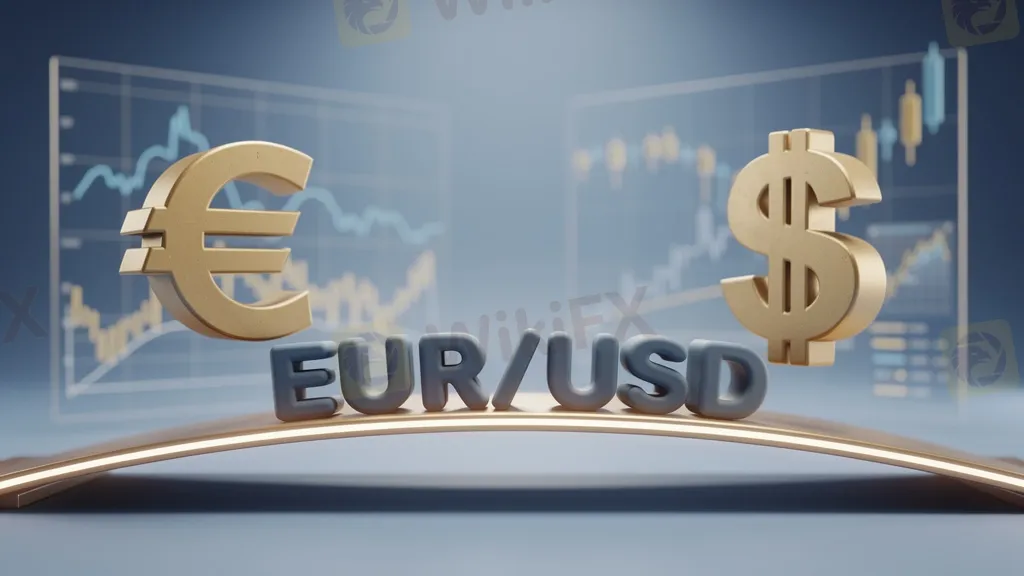
Major Pairs vs. Cross Pairs: Why Every Beginner Should Start With EUR/USD
If you're new to Forex and you've already been eyeing exotic pairs like USD/TRY or GBP/ZAR, stop.
I'm not saying those pairs are bad. I'm saying you're not ready for them yet. And trading something you're not ready for is one of the fastest ways to blow a live account.
Let me break down the difference between major pairs and cross pairs, and explain exactly why EUR/USD is the pair you should be watching, analyzing, and practicing on from day one.
What's the Difference Between a Major Pair and a Cross Pair?
A major pair always includes the US Dollar on one side.
EUR/USD. GBP/USD. USD/JPY. USD/CHF. These are your majors. The USD is the world's reserve currency — a status it's held since the Bretton Woods agreement collapsed in 1971 and major currencies started floating freely. That history matters because it explains why the Dollar sits at the center of almost every important Forex transaction happening globally right now.
A cross pair (sometimes called a “cross rate”) is any currency pair that does not include the US Dollar.
EUR/GBP. AUD/JPY. EUR/CHF. These pairs exist, they move, and they can be traded. But here's what most beginners don't realize: a cross pair's price is still largely derived from the underlying USD pairs. EUR/GBP is essentially a reflection of EUR/USD and GBP/USD fighting each other. You're reading two stories at once without fully understanding either one.
Why Is EUR/USD the Best Starting Point for New Traders?
This isn't opinion. It's math, liquidity, and common sense combined.
The spread is the lowest in the market.
When you trade EUR/USD, your broker's spread is typically 0.1 to 1.5 pips, depending on market conditions. Compare that to an exotic pair like USD/TRY, where spreads can jump to 20, 30, even 50+ pips. For a beginner still learning to read price action, starting with a high-spread pair is like running a race with ankle weights on. You're losing money before the trade even moves.
The liquidity is the deepest in the world.
EUR/USD accounts for roughly 20-25% of total daily Forex volume. That volume translates into tight spreads, smooth price movement, and technical levels that actually hold. On thinly traded pairs, support and resistance zones get blown through without warning. On EUR/USD, the market respects key levels far more consistently.
There is more educational content available.
Every Forex course, every trading book, every analysis video defaults to EUR/USD as the example. When you're learning, pattern recognition is everything. You need to see clean trending markets and clear consolidation zones. EUR/USD gives you textbook setups more often than any other pair.
The data is transparent and well-covered.
EUR/USD is driven by two of the most analyzed economies on Earth — the Eurozone and the United States. Interest rate decisions from the ECB and the Federal Reserve, inflation data, employment figures — this information is published widely and discussed extensively before and after each release. You can actually understand why the pair moves. On cross pairs, especially EM crosses, you're often trading blind against forces you can't easily track.
Does Starting Simple Mean Staying Simple?
Not at all.
Once you've built real consistency on EUR/USD — you know how it breathes during the London session, you've seen how it reacts to NFP Fridays, you understand what a range day looks like versus a trending day — then you can start exploring other majors like GBP/USD or USD/JPY.
Cross pairs come after that. They have their place in a mature portfolio, but they reward experience, not impatience.
The Safety Check: Who's Holding Your Money?
Here's something the glossy ads never mention.
It doesn't matter how well you read EUR/USD if your broker is running a scam operation. The Forex industry has more bad actors than most retail traders realize, and they target beginners specifically.
Before you deposit a single cent, check your broker's regulatory status on WikiFX. It's a free tool that lets you verify licenses from regulators like the FCA (UK), ASIC (Australia), and others. A broker not showing up there, or showing up with complaints and warnings, is a broker you should walk away from immediately.
Also check your spreads before trading live. On EUR/USD, a reputable, regulated broker should offer competitive, transparent pricing. If the spreads on EUR/USD look unusually wide, that's a red flag about the broker's model.
The Move: What to Actually Do This Week
If you're a complete beginner, here is your practical plan:
Open a demo account and trade only EUR/USD for at least 30 days.
Watch how the pair behaves during the London session (8am–12pm GMT) and the New York session overlap (1pm–4pm GMT). That's when volume is highest and setups are cleanest.
Pay attention to key support and resistance levels around round numbers like 1.0800, 1.0900, 1.1000. The big players watch those levels too.
Check economic calendars before every session. Know when the Fed or ECB is speaking. Don't hold positions through major data releases until you understand how EUR/USD typically reacts.
Verify your broker license on WikiFX before going live.
Keep your position sizes small. The point of the first few months is learning, not earning.
EUR/USD is not exciting. It's not going to make you rich overnight. But it will teach you more about how this market actually works than any exotic pair ever could — and it will do it without eating your account alive in the process.
This article is for educational purposes only. Forex trading involves significant risk of capital loss. Past performance is not indicative of future results. Always trade responsibly and only with funds you can afford to lose.

Disclaimer:
The views in this article only represent the author's personal views, and do not constitute investment advice on this platform. This platform does not guarantee the accuracy, completeness and timeliness of the information in the article, and will not be liable for any loss caused by the use of or reliance on the information in the article.
WikiFX Broker
Latest News
China’s Renminbi Challenges Dollar Dominance | What It Means for Malaysia
 WikiFX
AXIORY Regulatory Status: A Complete Guide to Its Licenses and Company Details
WikiFXIs AXIORY Safe or Scam? A 2026 Deep Dive
WikiFXTradeview Markets Review: Regulation, WikiFX Score & Forex Trading Insights
WikiFXXS Broker Review 2026: Withdrawal Scams & Regulation Issues
WikiFX24markets Exposed: Cloned License, $45,500 User Losses, and Withdrawal Scams Signal Stark Warning
WikiFXZERO MARKETS Review: Scam Warning & $116K Withdrawal Blocked
WikiFXFOREX.com Analysis Report
WikiFXBinany Review: Examining Reported Withdrawal Denials & Deposit Failure Complaints
WikiFXMr Pips Forex Scam Exposed as Losses Hit RM240 Million
WikiFXCurrency Calculator
USD

CNY
Current Rate:0
Amount
USD
Available
CNY
Calculate 