

Global Broker Regulation Inquiry App
About WikiFX
English
简体中文
繁體中文
English
Pусский
日本語
ภาษาไทย
Tiếng Việt
Bahasa Indonesia
Español
हिन्दी
Filippiiniläinen
Français
Deutsch
Português
Türkçe
한국어
العربية
Tech War Intensifies: US Targets Nvidia China Exports with Tariffs Amid Global AI Chip Scarcity
Abstract:The global tech war has entered a new phase with the US imposing 25% tariffs on Nvidia chips destined for China, coinciding with a severe capacity crunch at TSMC that threatens AI hardware supply.
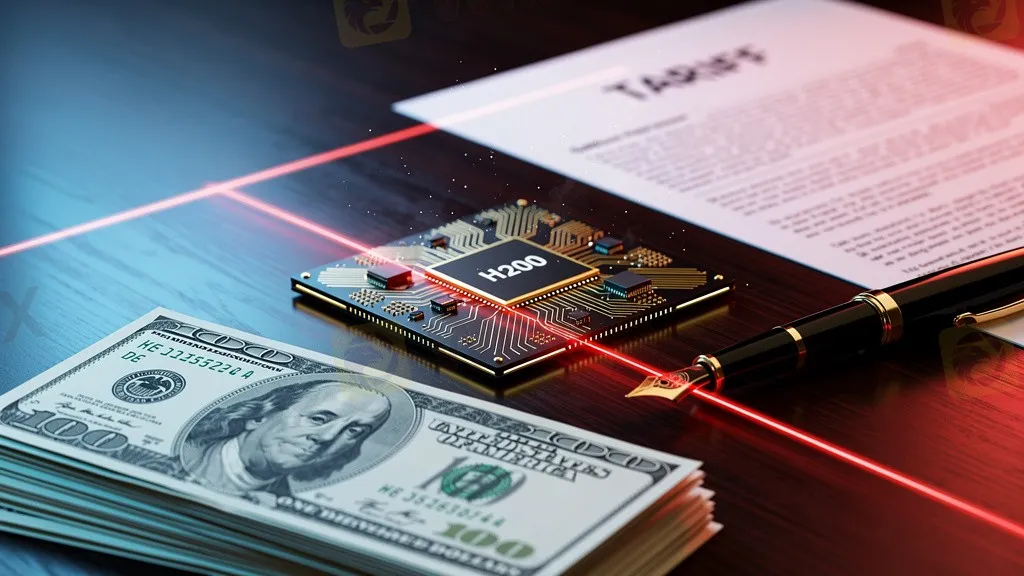
The battle for semiconductor supremacy has escalated, with the US administration launching a two-pronged attack on tech supply chains. New tariffs on Nvidia's exports to China are being rolled out just as the world's leading foundry, TSMC, signals a critical shortage of capacity, complicating the outlook for the global tech sector and currencies exposed to the chip cycle like the New Taiwan Dollar (TWD) and Korean Won (KRW).
The Tariff Wall: H200 Chips Targeted
President Trump has signed an executive order imposing a 25% tariff on specific high-performance chips, including Nvidia's H200, if re-exported to China.
- Strategic Decoupling: While the administration is creating a pathway for restricted sales (likely to maintain revenue for US firms), the tariffs and strict volume caps (exports to China cannot exceed 50% of US volume) act as a significant barrier.
- China's Response: Reports suggest Beijing is exploring counter-measures, including caps on the purchase of US chips, potentially accelerating China's drive for semiconductor self-sufficiency despite the performance gap.
The Supply Shock: TSMC Sold Out Until 2027
Compounding the geopolitical friction is a physical bottleneck. Taiwan Semiconductor Manufacturing Co. (TSMC) reports that its 3nm production lines are fully booked through 2027.
- Capital Expenditure Surge: In a sign of desperation to meet AI demand, TSMC has hiked its 2026 CapEx guidance to $52-$56 billion.
- Client Migration: The shortage is so acute that loyal TSMC clients, including the “Big Six” (Apple, Nvidia, AMD, etc.), are reportedly exploring alternative foundries like Samsung and Intel for overflow production.
Market Impact
- Equity Volatility: The combination of tariffs and supply constraints introduces headwinds for the Nasdaq and global semiconductor indices.
- Forex Flows: The TWD may find support from TSMC's pricing power and massive CapEx spending, but geopolitical risks remain a dampener. Conversely, the USD benefits from the “America First” trade policies, as the tariffs effectively re-shore capital or tax foreign consumption of US tech.
Disclaimer:
The views in this article only represent the author's personal views, and do not constitute investment advice on this platform. This platform does not guarantee the accuracy, completeness and timeliness of the information in the article, and will not be liable for any loss caused by the use of or reliance on the information in the article.
WikiFX Broker
Latest News
Bravofxtrade Exposure: No Official Website Link, No Regulation, Only Scam Records
 WikiFX
Before Hitting Buy: Five Core Lessons for New Forex Traders
WikiFXJRJR (金荣中国) Review: A Deep Dive into Compromised Accounts and Missing Funds
WikiFXVCP Markets Review 2026: Is this Forex Broker Legit or a Scam?
WikiFXLand Prime Regulatory Status: A Complete Guide to Its Licenses and Company Structure
WikiFXIs FXGlobe Broker Safe? Regulation and Rating Review 2026
WikiFXMSquare Review 2026: Is this Forex Broker Legit or a Scam?
WikiFXBlueberry Markets Review: Examining the Latest User Complaints in 2026
WikiFXMalaysia’s RM1.47 Billion Scam Crisis: How Thousands Were Tricked Through Social Media
WikiFXCHINA FUTURES Regulation: Status of China Securities Futures
WikiFXCurrency Calculator
USD

CNY
Current Rate:0
Enter amount
USD
Redeemable Amount
CNY
Calculate 