

Global Broker Regulation Inquiry App
About WikiFX
English
简体中文
繁體中文
English
Pусский
日本語
ภาษาไทย
Tiếng Việt
Bahasa Indonesia
Español
हिन्दी
Filippiiniläinen
Français
Deutsch
Português
Türkçe
한국어
العربية
Asia Mixed: China Battles Deflation While Korean AI Stocks Surge
Abstract:China faces persistent deflationary pressure, prompting calls for aggressive monetary easing and fiscal stimulus from the PBOC in 2026. Meanwhile, South Korea's KOSPI surges 15% on an AI-driven boom, despite retail investors exiting the market.
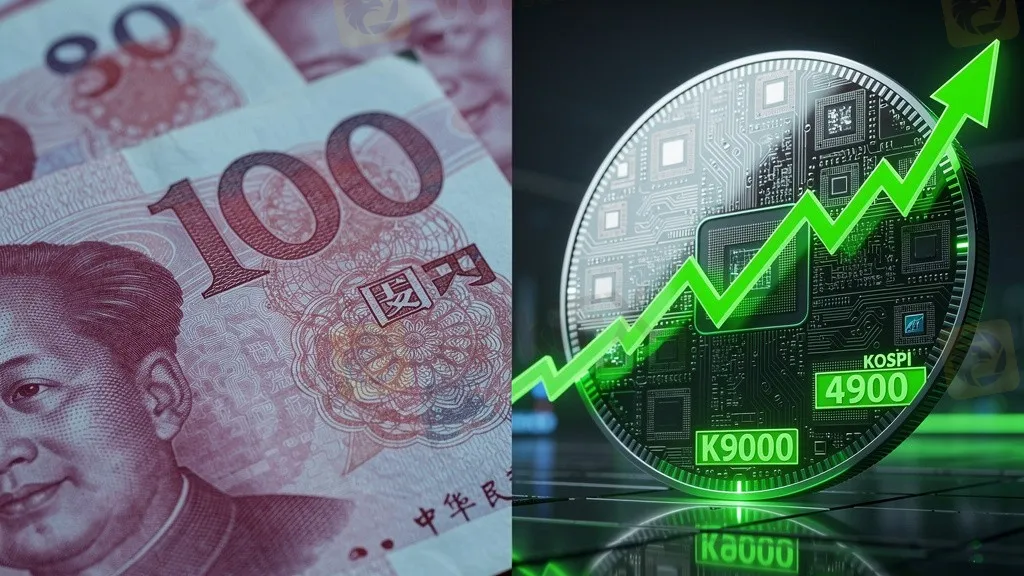
Asian markets are displaying a sharp divergence in early 2026. While China grapples with entrenched deflation and weak demand, South Korea is riding a wave of foreign capital inflows driven by the global Artificial Intelligence (AI) boom.
China: The Case for Aggressive Easing
Data indicates that China's economy is running below its potential, with the PPI (Producer Price Index) remaining in negative territory for over 39 months. The CPI (Consumer Price Index) has flatlined, falling significantly short of the 2% target.
- Policy Outlook: Analysts are urging the People's Bank of China (PBOC) to maintain a loose monetary stance throughout 2026. Expectations are high for further cuts to both the Reserve Requirement Ratio (RRR) and key interest rates.
- Forex Impact: The divergence between a dovish PBOC and other major central banks continues to put structural pressure on the Chinese Yuan (CNY). However, significant fiscal stimulus packages anticipated in the “15th Five-Year Plan” could offer support to commodity currencies like the AUD and NZD if infrastructure spending ramps up.
South Korea: Institutional Buying Drives KOSPI to 4900
In stark contrast, South Korea'sKOSPI index has broken the 4900 barrier, gaining 1.3% intraday and 15% year-to-date.
- Institutional Shift: The rally is characterized by a “Foreign In, Retail Out” dynamic. Global funds maintain a strong appetite for Korea's memory chip giants, betting on a sustained semiconductor super-cycle through 2029.
- Valuation: Despite the rally, the MSCI Korea Index trades at a forward P/E of just 10.9x, suggesting valuations remain attractive relative to peer markets.
- Risks: Investors remain wary of external shocks, particularly regarding US trade policy and the potential for spillover volatility if the “Trump Trade” shifts gears.
For Forex traders, the strength in Korean equities often correlates with a supportive environment for Asian emerging market currencies, though the aggressive strength of the USD remains the dominant global factor.
Disclaimer:
The views in this article only represent the author's personal views, and do not constitute investment advice on this platform. This platform does not guarantee the accuracy, completeness and timeliness of the information in the article, and will not be liable for any loss caused by the use of or reliance on the information in the article.
WikiFX Broker
Latest News
CHINA FUTURES Login: Secure CFFEX Access & Safety Guide
 WikiFX
CAPITARIA Review 2026: Should You Trade With This Broker?
WikiFXRM108,000 Gone: WhatsApp Stock Scam Trapped a Retiree with Promises of 80% Returns
WikiFXASX Markets Regulation: Is This Forex Broker Safe?
WikiFXWhy Paid Forex Signals Cannot Replace a Personal Trading System
WikiFXHEADWAY Review 2026: Is this Forex Broker Legit or a Scam?
WikiFXPhaseForex Review 2026: Is this Forex Broker Legit or a Scam?
WikiFXAxi Says 46% of Clients Now Hold Crypto Exposure
WikiFXDUHANI Regulation & License Review: Is This Broker Safe? An In-Depth Analysis
WikiFXClose Up With WikiFX - A Closer Look at InterStellar Group
WikiFXCurrency Calculator
USD

CNY
Current Rate:0
Enter amount
USD
Redeemable Amount
CNY
Calculate 