Aha Group $35 Million Crypto Fraud Draws Harsh Jail Terms in South Korea
Senior executives of the Aha Group have been handed lengthy prison sentences for orchestrating a crypto fraud of $35 million.
Original

简体中文
繁體中文
English
Pусский
日本語
ภาษาไทย
Tiếng Việt
Bahasa Indonesia
Español
हिन्दी
Filippiiniläinen
Français
Deutsch
Português
Türkçe
한국어
العربية

Abstract:Tether, the issuer of the world’s largest stablecoin, USDt, has announced that it will cease support for its euro-pegged stablecoin, EURt (EURT), across all blockchains. Users are required to redeem their EURt holdings by 25 November 2025, following the company’s decision to phase out the token.
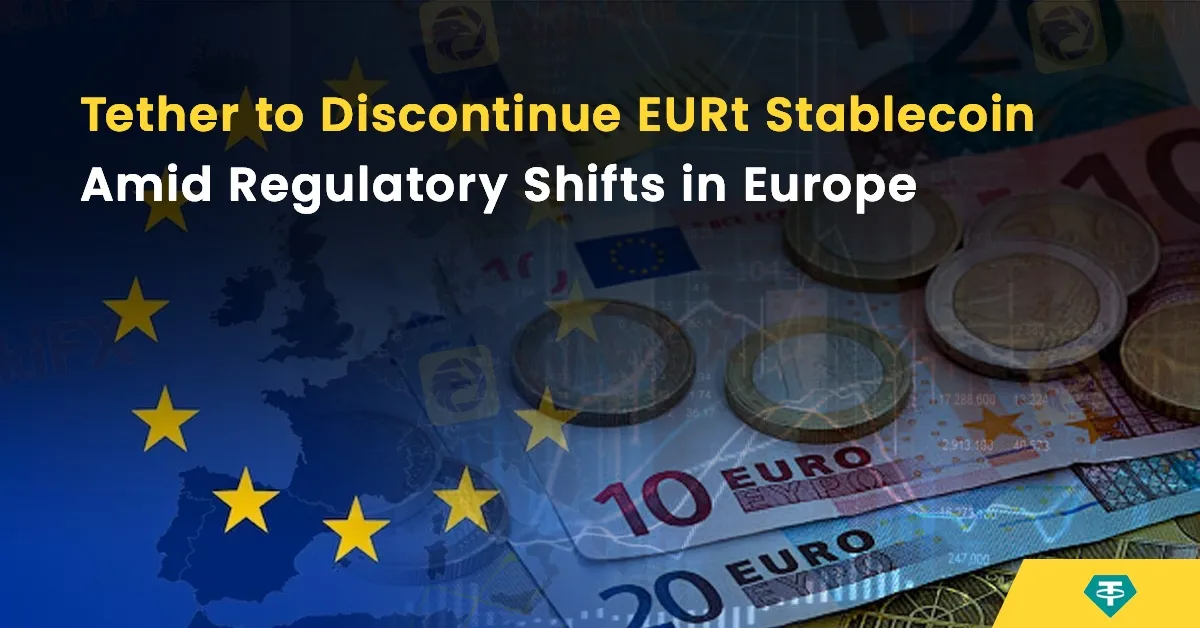
Tether, the issuer of the world‘s largest stablecoin, USDt, has announced that it will cease support for its euro-pegged stablecoin, EURt (EURT), across all blockchains. Users are required to redeem their EURt holdings by 25 November 2025, following the company’s decision to phase out the token.
The move comes in response to evolving regulatory landscapes in Europe, particularly the forthcoming Markets in Crypto-Assets (MiCA) regulation, which is set to take full effect by the end of 2024. In a statement released on 27 November, Tether highlighted that its decision aligns with a strategic evaluation of the regulatory frameworks affecting stablecoins in the European market. The company underscored its commitment to prioritising community interest when deciding which tokens to support.

Introduced in 2016, EURt was designed to provide a stable euro-backed asset for the cryptocurrency market, maintaining a 1:1 peg with the euro. However, despite its longevity, EURt has struggled to gain significant traction. With a market capitalisation of just $27 million, it accounts for a mere 0.02% of the market cap of its USD-backed counterpart, USDt. Tether revealed that the last request to mint new EURt tokens was processed in 2022, signalling a decline in demand well before the current decision to retire the stablecoin.
Tether‘s exit from the euro stablecoin market reflects growing regulatory scrutiny under MiCA, which introduces stringent requirements for stablecoin issuers, including reserve management and transparency. Tether’s CEO, Paolo Ardoino, has previously criticised the MiCA framework, arguing that it could introduce systemic risks to the banking sector by imposing overly rigid controls on stablecoin operations.
Despite retiring EURt, Tether remains committed to supporting regulatory-compliant innovations. The company has backed several MiCA-compliant projects, including EURq and USDq stablecoins developed by the Dutch fintech firm Quantoz Payments. These stablecoins, created in partnership with Kraken exchange and Fabric Ventures, will use Tethers proprietary Hadron technology to streamline compliance, anti-money laundering processes, and blockchain integration for issuers.
Currently, Circle‘s EURC and Société Générale’s EURCV dominate the euro stablecoin market, holding a combined market share of 67%. Quantozs EURq aims to carve out a niche in this competitive space. As part of its compliance with MiCA regulations, Quantoz will maintain 2% of the EURq token supply on its balance sheet, ensuring transparency and accountability.
Tether‘s strategic pivot extends beyond the euro market. The company recently announced partnerships with UAE-based firms Phoenix Group and Green Acorn Investments to develop a dirham-pegged stablecoin. This initiative highlights Tether’s ongoing efforts to expand its portfolio while navigating complex regulatory environments.

Disclaimer:
The views in this article only represent the author's personal views, and do not constitute investment advice on this platform. This platform does not guarantee the accuracy, completeness and timeliness of the information in the article, and will not be liable for any loss caused by the use of or reliance on the information in the article.

Senior executives of the Aha Group have been handed lengthy prison sentences for orchestrating a crypto fraud of $35 million.
Are you struggling to receive withdrawals from Ester, a Saint Lucia-based forex broker? Did you face trade manipulation on various aspects, including copytrading? Did this manipulation lead to massive capital losses? You are not alone! Several traders have accused the broker of trading misconduct. In this Ester review article, we have examined their allegations. Have a look!
GODO, a Mauritius-based forex broker, is gaining attention from users worldwide for the various products and services it offers to them. According to the broker’s official website, it attributes the decision and success to making trading go beyond a service to becoming an exceptional experience for clients. So, if you are already its customer or are planning to become one, here is the comprehensive GODO review you must read. The review will take you through different account types, trading conditions and user reports.

TRADE.COM, a Mauritius-based forex broker, is gaining attention on broker review platforms, such as WikiFX, for more negative reasons than positive ones. The negative reports have emerged on account of the constant withdrawal denials and capital losses due to the alleged wrong trading guidance by the broker. There are positive reviews too, but most of them sound too generic. Exposure reports cover specific glitches traders have faced here. In this TRADE.COM review article, we have investigated multiple complaints against the forex broker. Read on!
 WikiFXWikiFXWikiFXWikiFXWikiFXWikiFXWikiFXWikiFXWikiFXWikiFX
