CTBC Securities Review: Is This Taiwan Broker Safe for Forex?
Read our CTBC Securities review to learn about its regulation, login process, and Forex trading services. Find out if CTBC Securities is the right broker for you.
Original

简体中文
繁體中文
English
Pусский
日本語
ภาษาไทย
Tiếng Việt
Bahasa Indonesia
Español
हिन्दी
Filippiiniläinen
Français
Deutsch
Português
Türkçe
한국어
العربية

Abstract:In the wake of the FTX collapse, the Commodity Futures Trading Commission, the Securities and Exchange Commission, and the United States Attorney for the Southern District of New York all brought charges against Sam Bankman-Fried.
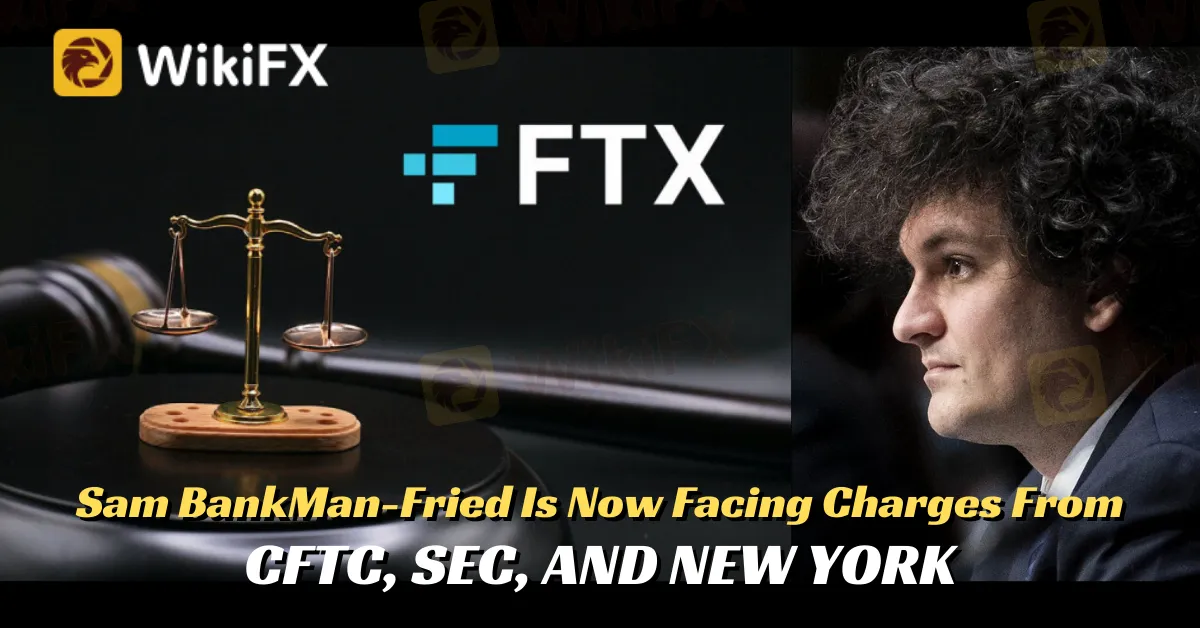
The US Attorney, the CFTC, and the SEC all filed fraud allegations.
The former FTX CEO was charged by the US Attorney with wire fraud, commodities fraud, securities fraud, and money laundering. The CFTC is suing three defendants (SBF, FTX, and Alameda) for causing over $8 billion in FTX client deposits to be lost. The SEC is concentrating its efforts on safeguarding FTX stock investors who were duped by Sam Bankman-Fried.
According to the CFTC, SBF, FTX, and Alameda damaged customers in an $8 billion scam.
The Commodity Futures Trading Commission has filed a lawsuit against Samuel Bankman-Fried, FTX Trading Ltd. d/b/a FTX.com (FTX), and Alameda Research LLC in the United States District Court for the Southern District of New York (Alameda).
Defendants are accused of fraud and significant misrepresentation in connection with the interstate sale of digital commodities, which resulted in the loss of nearly $8 billion in FTX client deposits.
According to the complaint, despite the fact that the centralized digital asset derivative platform FTX claimed that both client fiat and digital assets would be held in its custody and segregated from FTX's assets, customer assets were routinely accepted and held by Alameda, a sister company that provided market making.
The regulator further claimed that Alameda, Bankman-Fried, and others used consumer cash for their own operations and activities, including purchasing luxury real estate, making political donations, and investing in the high-risk, illiquid digital asset market.
Furthermore, the CFTC claims that, at the direction of Bankman-Fried, FTX employees created features in the FTX code that favored Alameda and allowed it to execute transactions even when it lacked sufficient funds, such as a “allow negative flag” and effectively limitless line of credit that allowed Alameda to withdraw billions of dollars in customer assets from FTX.
Rostin Behnam, Chairman of the CFTC. “The CFTC is fully committed to utilizing all available enforcement measures to safeguard investors and identify those who attempt to benefit via fraud and misappropriation.”
“Digital commodities asset markets continue to offer dangers for investors owing to a lack of fundamental safeguards,” stated CFTC Acting Director of Enforcement Gretchen Lowe. The defendants committed fraud by touting and marketing FTX.com as a model digital commodities asset platform, to damage US investors and the reputation of the digital asset markets. We will work relentlessly to bring such fraudsters responsible by using the full spectrum of our enforcement authorities.
According to the SEC, Samuel Bankman-Fried cheated stock investors in FTX Trading Ltd.
In a separate action, the Securities and Exchange Commission accused Samuel Bankman-Fried of organizing a plan to mislead stock investors in FTX Trading Ltd. (FTX) as the Bahamas-based business collected more than $1.8 billion, including about $1.1 billion from 90 US-based investors.
The “years-long deception” disguised from FTX investors the fact that monies from FTX clients were routed to Alameda Research LLC, his privately-held crypto hedge fund. Furthermore, Alameda received hidden preferential treatment (including a nearly limitless “line of credit” and exemption from some important FTX risk mitigation procedures). FTX was exposed to concealed risk as a result of Alameda's substantial ownership of overpriced, illiquid assets such as FTT.
According to the lawsuit, Bankman-Fried utilized FTX clients' commingled assets at Alameda to make hidden startup investments, expensive real estate acquisitions, and substantial political contributions.
“We claim that Sam Bankman-Fried erected a house of cards on a foundation of lies while promising investors that it was one of the safest structures in crypto,” stated SEC Chair Gary Gensler. Mr. Bankman-alleged Fried's fraud serves as a wake-up warning to crypto platforms that they must comply with our laws. With time-tested protections such as appropriately securing client cash and separating competing lines of business, compliance protects both those who invest on and those who invest in crypto platforms. It also sheds light on trading platform behavior for both investors and regulators via transparency and inspection power. The SEC's Enforcement Division is prepared to take action against platforms that do not comply with our securities laws.
“FTX operated behind a veneer of legitimacy Mr. Bankman-Fried created by, among other things, touting its best-in-class controls, including a proprietary 'risk engine,' and FTX's adherence to specific investor protection principles and detailed terms of service,” said Gurbir S. Grewal, Director of the SEC's Division of Enforcement. However, as we contend in our case, that veneer was not just thin, but also deceptive.
The demise of FTX shows the very serious hazards that unregistered crypto asset trading platforms may bring to both investors and clients. While we continue to investigate FTX and other entities and individuals for potential violations of federal securities laws, as alleged in our complaint, Mr. Bankman-Fried is being held accountable today for fraudulently raising billions of dollars from FTX investors and misusing funds belonging to FTX's trading customers.
On December 13, 2022, the United States Attorney for the Southern District of New York unsealed an indictment charging Bankman-Fried with wire fraud, commodities fraud, securities fraud, and money laundering in a concurrent, separate proceeding.
Stay tuned for more FTX News.
Download the WikiFX App from the APP STORE or GOOGLE PLAY STORE to stay updated on the latest news. Also, available for Windows PC!
Download link: https://www.wikifx.com/en/download.html

Disclaimer:
The views in this article only represent the author's personal views, and do not constitute investment advice on this platform. This platform does not guarantee the accuracy, completeness and timeliness of the information in the article, and will not be liable for any loss caused by the use of or reliance on the information in the article.

Read our CTBC Securities review to learn about its regulation, login process, and Forex trading services. Find out if CTBC Securities is the right broker for you.
Is QUOTEX safe? Our latest QUOTEX review reveals major withdrawal issues and lack of regulation. Check recent cases before your QUOTEX login or Forex trading.
Concerned about AssetsFX? Discover recent allegations of withdrawal issues and account manipulation. Protect your investments – read our AssetsFX review now!
Did you fail to execute the trade order on the Mazi Finance platform despite sufficient margin and adequate leverage? Did the broker breach the norms associated with profits gained through scalping? Failed to receive profits from the forex broker despite multiple attempts? Lured to invest under the impression of lucrative bonuses, but fell into the high spread trap? In this Mazi Finance review article, we have examined a series of alleged forex trading glitches by the trading enterprise. Let’s start investigating!
 WikiFXWikiFXWikiFXWikiFXWikiFXWikiFXWikiFXWikiFXWikiFXWikiFX
