Abstract:Having bucked a global dash to tighten monetary policy for a year, Asian central banks find themselves scrambling to catch up in order to tackle rising inflation and defend weakening currencies.
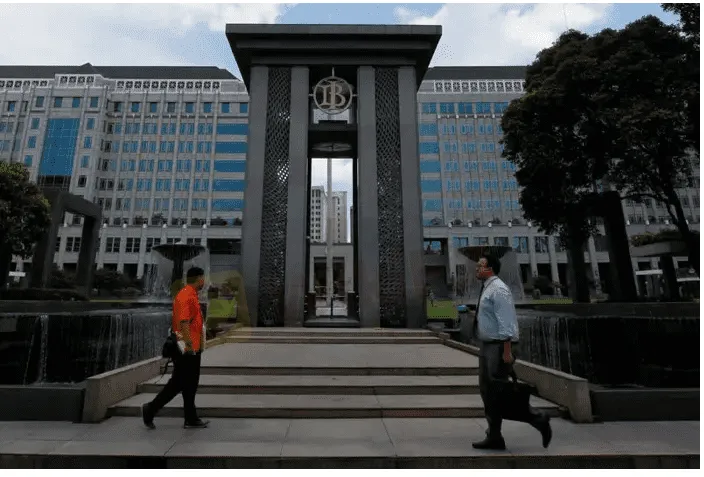
Market analysts suspect Indonesia, the last remaining dove in emerging Asia, may be the next to move by pushing interest rates higher on Thursday, as policymakers rush to convince investors they are tackling rising prices.
Singapore and the Philippines surprised markets with unscheduled tightening announcements last week, underlining the growing urgency among policymakers to act.
Asia has lagged as the rest of the world, including emerging markets, began lifting rates as early as last June, after the U.S. Federal Reserve kicked off an accelerated timeline for its policy tightening.
While relatively subdued inflation allowed central banks in Asia to remain dovish in a bid to support the post-pandemic economic recovery, that led to weakening currencies and capital outflows, even as the war in Ukraine exacerbated price pressures globally.
“Have central banks been too slow to act? Yes, I know, its a common question,” Ravi Menon, managing director of the Monetary Authority of Singapore, said at a conference on Tuesday.
And I don‘t want to sound defensive on behalf of my colleagues elsewhere but very few people saw this coming. The markets didn’t see it.
“The climb in inflation has been quite rapid. It was unusually fast … And many thought the bigger risks were on the downside on growth and so did not see this coming.”
Currencies and bonds have borne the brunt. Among the worst hit, the Philippine peso is down more than 10% year-to-date, and just off a nearly 17-year low of 56.53 per dollar. Yields on the countrys government bonds have spiked about 200 basis points (bps) since the start of the year.
The Thai baht has fallen more than 10% this year, and Thailand snapped a five-month streak of foreign investment into equities to lose $816 million in June.
A large part of the selling has been a response to rising Treasury yields and the U.S. dollar – factors beyond domestic policymakers control, giving Asia an excuse to hold off on rate hikes.
But central banks are suddenly finding they can no longer ignore rising food and oil prices. Thailand and Indonesia saw inflation hit multi-year highs this month.
Even South Korea, which began raising rates as early as August 2021, saw prices hit a 24-year high in June, triggering a record half-point rate hike last week.
“What I suspect they‘re doing at this stage is really (to) still focus on fighting inflation for the next few months, because that’s where the concern is,” said Euben Paracuelles, chief ASEAN economist at Nomura.
He added that rising global headwinds and the risk of recession in major economies complicated the policy challenge at a time when inflation was at the start of a sharp pickup in Southeast Asia.
Peer pressure
India, which first saw its central bank raising rates by 40 bps in an off-cycle move in May, has logged six straight months of foreign investor equity outflows, contributing to a record drop in the rupee.
The historically volatile Indonesian rupiah is actually only down around 5% versus the dollar for the year, although it saw its largest monthly fall of 2.2% in June.
It has to some extent been helped by resource-rich Indonesias improved trade position and the fact foreigners now hold less than a fifth of its high-yielding bonds.
Others, such as the Philippines and Thailand, are far more vulnerable owing to their current account deficits and, in the latters case, reliance on a tourism sector still struggling following the COVID pandemic.
“Indonesia has been, for the most part, able to hold off on rate hikes. But I actually think theyll hike … just because everybody has tightened already,” said Nicholas Mapa, senior economist at ING.
Yet, only 11 out of 29 economists polled by Reuters expect Bank Indonesia to raise rates on Thursday.
“The room to keep growth-supportive monetary policy is definitely coming to a close very imminently,” said UOB economist Enrico Tanuwidjaja, referring to central banks that have yet to raise rates.
A senior director at the Bank of Thailand said last week that the central bank is highly likely to raise its key policy rate in August, adding that the bank is ready to intervene if the baht weakens too much.
“At the end of the day, we are dealing with a much tighter global monetary policy landscape, so theres definitely compulsion for central banks in general to raise rates,” said OCBC economist Wellian Wiranto.