Abstract:The S&P 500 Index is the largest and most successful stock market index in the world, and it can be traded through major Forex and CFD firms. In this post, I'll show you how to trade the S&P 500 Index, why it can be such a profitable investment, and the most effective strategies individual traders may employ to do so.
What exactly is the S&P 500 Index?
The S&P 500 Index is a stock market index that includes the 500 largest publicly listed firms in the United States. The index is weighted based on the market capitalizations of its constituent businesses, essentially reflecting the market worth of American large business. For example, if business A has one million shares issued at $1 each and company B has one million shares issued at $2 each, the price change of company B's share will contribute twice as much to the changing value of the index as the price change of company A's.
Because the United States has been the world's largest and most powerful economy for over a century, its stock market has piqued the curiosity of foreign investors, particularly since the 1970s deregulations made retail international investing more accessible.
Why Should I Care About the S&P 500 Index?
The S&P 500 Index is more interesting to investors and traders around the world than any other stock market index, except perhaps the NASDAQ 100, the major American technology index, because it is a very broad index that represents the leading lights of the world's largest and most successful economy.
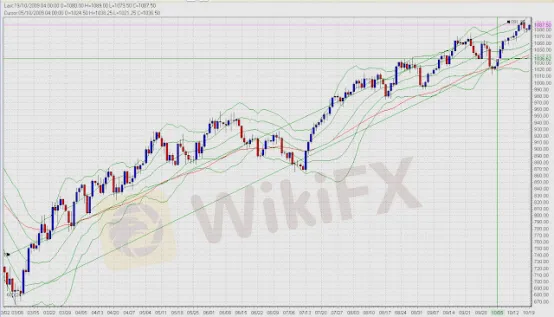
We can see that stock market indexes, in general, and the S&P 500 Index in particular, have a “long bias,” which means that their values tend to climb over time. This is in contrast to Forex, another asset class available for trading through most retail brokerages, which has no directional bias. That implies that even something as basic as trading the S&P 500 long might provide traders a statistically beneficial edge. Building a lucrative edge in Forex or commodities needs a lot more effort.
The S&P 500 Index may be traded inexpensively and reliably at practically every major Forex brokerage that also provides CFDs. Why wouldn't traders and investors from all over the world be interested in something with such a strong long-term track record?
What Are My Options for Investing in the S&P 500 Index?
Because investing often entails purchasing and keeping an asset for months or years, it's critical to use a vehicle that doesn't charge periodic holding expenses, while spread and commission aren't as crucial. That implies that if you want to invest in the S&P 500, you should avoid using brokerage CFDs since they nearly always create an overnight swap charge everyday, which eats into long-term earnings. Furthermore, buying a weighted sample of all 500 shares, as would be necessary to duplicate the index, is unfeasible and expensive for ordinary investors.
What Are My Options for Investing in the S&P 500 Index?
Investing in exchange traded funds (ETFs), which closely track the performance of the S&P 500 Index, is a practical alternative for investors. These ETFs possess a big percentage of the 500 firms that make up the index. Due to the expenses of purchasing and selling the shares they must possess, as well as other essential administration, ETFs nearly always underperform the Index, but they are certainly the best alternative for ordinary investors.
Some of the most popular ETFs tracking the S&P 500 Index which can be found at major stockbrokers are:
SPDR S&P 500 ETF (NYSEARCA:SPY)
SPDR PORTFOLIO S&P 500 ETF (NYSEARCA:SPLG)
VANGUARD S&P 500 ETF (NYSEARCA:VOO)
iSHARES CORE S&P 500 ETF (NYSEARCA:IVV)
What Are My Options for Investing in the S&P 500 Index?
What is the best way to trade the S&P 500 Index?
Traders seeking to benefit from several short-term long or short positions in the S&P 500 Index are considerably more interested in accessing an asset that is liquid and often offers competitive spreads and commissions. Longer-term expenses of maintaining holdings, such as overnight financing fees known as “swaps,” become less relevant.
Trading the S&P 500 Index as a CFD is the most convenient option for most retail traders. Many Forex firms, fortunately, provide CFD trading in stock market indexes.
Traders with higher deposits may be able to receive a better bargain by trading futures or options contracts, such as the e-mini S&P 500 futures or options, rather than CFDs. The tick size of the e-mini S&P 500 futures contract is $12.50, which means the smallest position you may take has a notional value of around half a million dollars, which is much too huge for many traders. Fortunately, a new S&P 500 futures contract has been available since 2019: the e-micro S&P 500 futures contract, which has a tick size of only $1.25, making it feasible to initiate a position with a nominal value as little as $50,000.
Traders do not need to choose stocks to benefit from the stock market; instead, they may trade broad market indexes like the S&P 500 to diversify market risk while still being exposed to the tremendous upside observed in recent years and decades. Now that the majority of Forex brokers provide trading in the S&P 500, the world's largest and best-performing index, retail traders may take advantage of the chance. Trading short should be done with great caution, if at all, given the Index's recent long tilt. Long after negative retracements on the daily chart begin to turn around, traders have earned a lot of money trading the Index.