

Global Broker Regulatory Inquiry Platform
WikiFX
English
简体中文
繁體中文
English
Pусский
日本語
ภาษาไทย
Tiếng Việt
Bahasa Indonesia
Español
हिन्दी
Filippiiniläinen
Français
Deutsch
Português
Türkçe
한국어
العربية
PU PRIME Review: Regulation, Licences and WikiScore Analysis
Abstract:This PU Prime review provides a detailed examination of the broker’s regulatory framework, licensing coverage, and overall standing.
This PU Prime review provides a detailed examination of the brokers regulatory framework, licensing coverage, and overall standing based on information available on WikiFX. As a global broker regulatory query platform, WikiFX evaluates brokers using measurable criteria such as regulatory authorisation, compliance records, and operational transparency.
According to WikiFX, the PU Prime broker holds a WikiScore of 8.53 out of 10, placing it within a relatively high tier among global brokers. This score reflects a combination of regulatory coverage across multiple jurisdictions and operational indicators that contribute to its market positioning. For traders, understanding the brokers licences and the authorities behind them is essential in assessing credibility and potential risk.
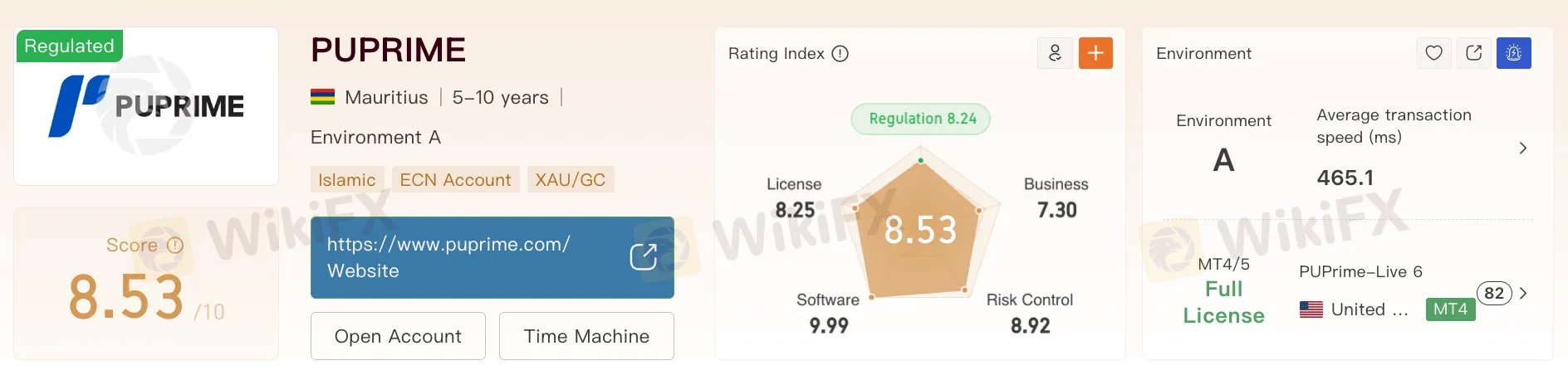
View WikiFXs full review on PU Prime here: https://www.wikifx.com/en/dealer/3361482328.html
PU Prime operates under licences issued by the Australia Securities and Investment Commission, the Financial Sector Conduct Authority of South Africa, and the Seychelles Financial Services Authority. These licences collectively form the basis of PU Prime regulation, supporting its operations across both established and offshore financial jurisdictions.
Australia Securities and Investment Commission
PU Prime is authorised by the Australia Securities and Investment Commission under a Market Making Licence with licence number 410681. ASIC is widely recognised as a major financial regulator and is responsible for overseeing financial markets and service providers in Australia.
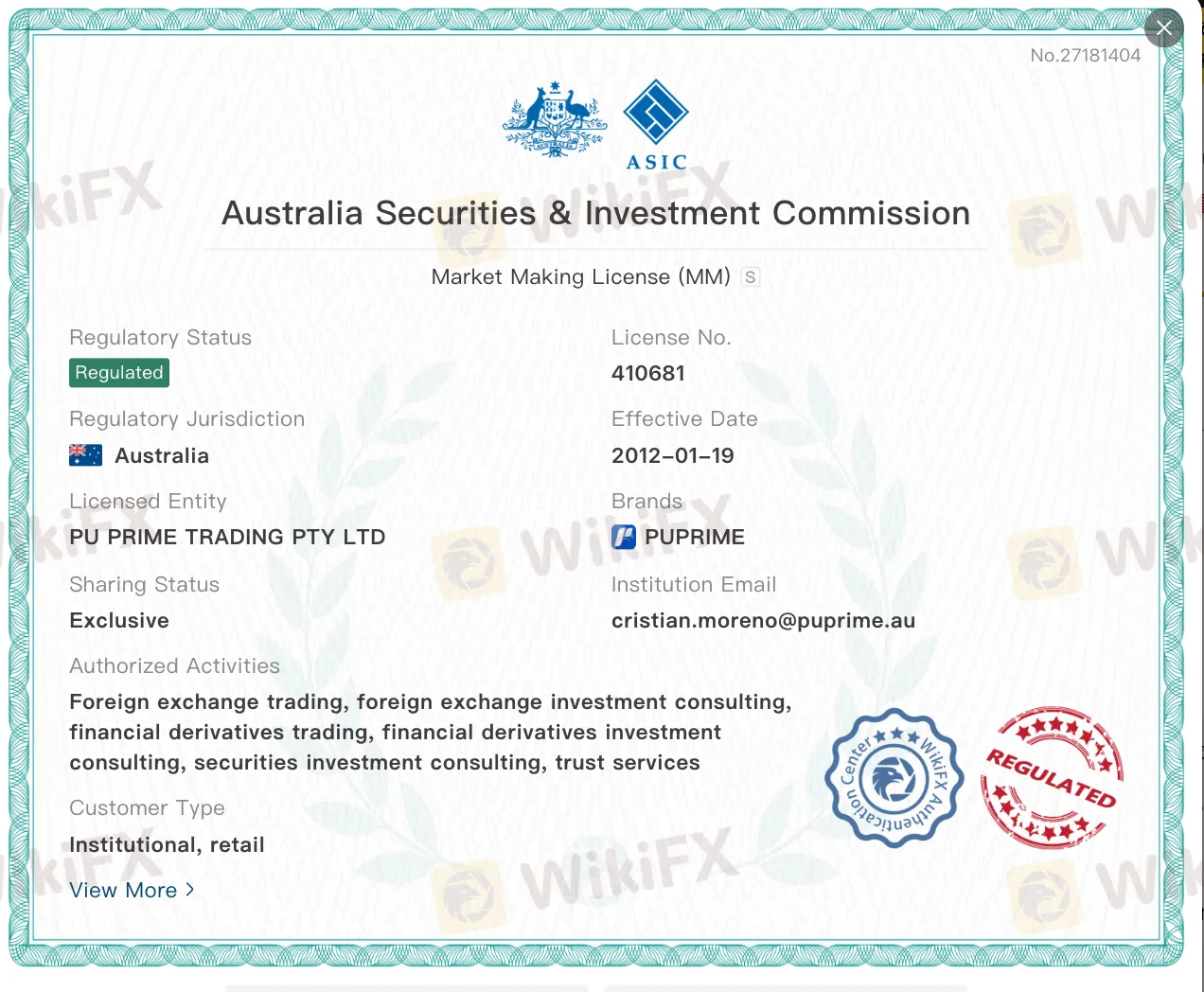
Firms regulated by ASIC must meet stringent requirements, including capital adequacy standards, segregation of client funds, and regular financial reporting. The regulator enforces conduct of business rules designed to promote transparency and protect investors.
From a PU Prime regulation perspective, the ASIC licence represents a significant component of the brokers regulatory structure. It indicates that the broker operates under a well established framework known for its emphasis on compliance and accountability.
Financial Sector Conduct Authority of South Africa
In addition to its Australian licence, PU Prime is authorised by the Financial Sector Conduct Authority of South Africa under a Derivatives Trading Licence with licence number 52218. The FSCA supervises financial institutions in South Africa and focuses on ensuring fair treatment of customers and market integrity.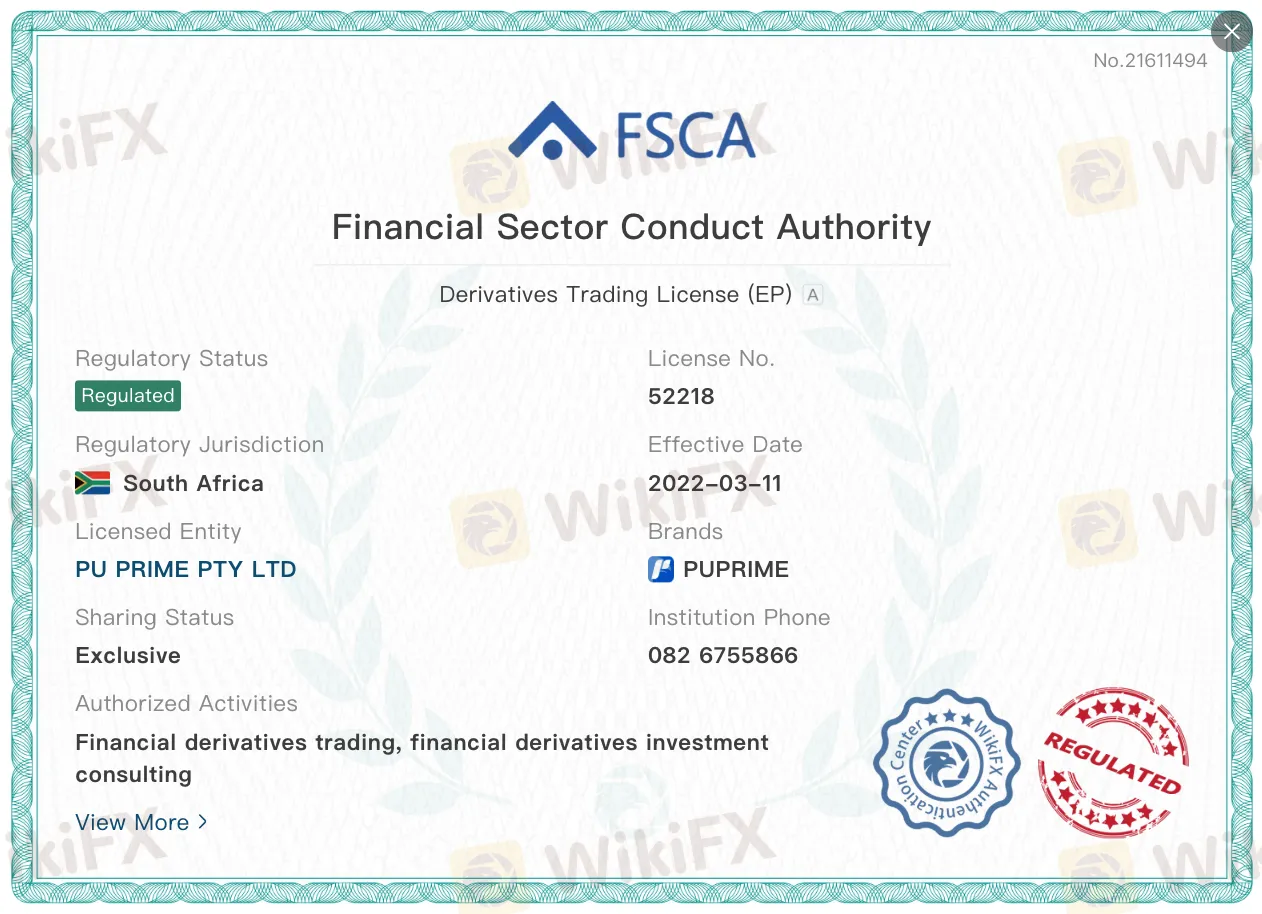
Licensed firms are required to comply with regulatory standards related to operational conduct, financial reporting, and transparency. The FSCA licence enables the broker PU Prime to provide trading services within the South African market under recognised oversight.
From a review PU Prime standpoint, this licence contributes to the brokers multi jurisdictional presence and expands its regulatory reach beyond Australia.
Seychelles Financial Services Authority
PU Prime also holds a Derivatives Trading Licence issued by the Seychelles Financial Services Authority with licence number SD050. The FSA regulates financial services providers incorporated in Seychelles, which is considered an offshore financial centre.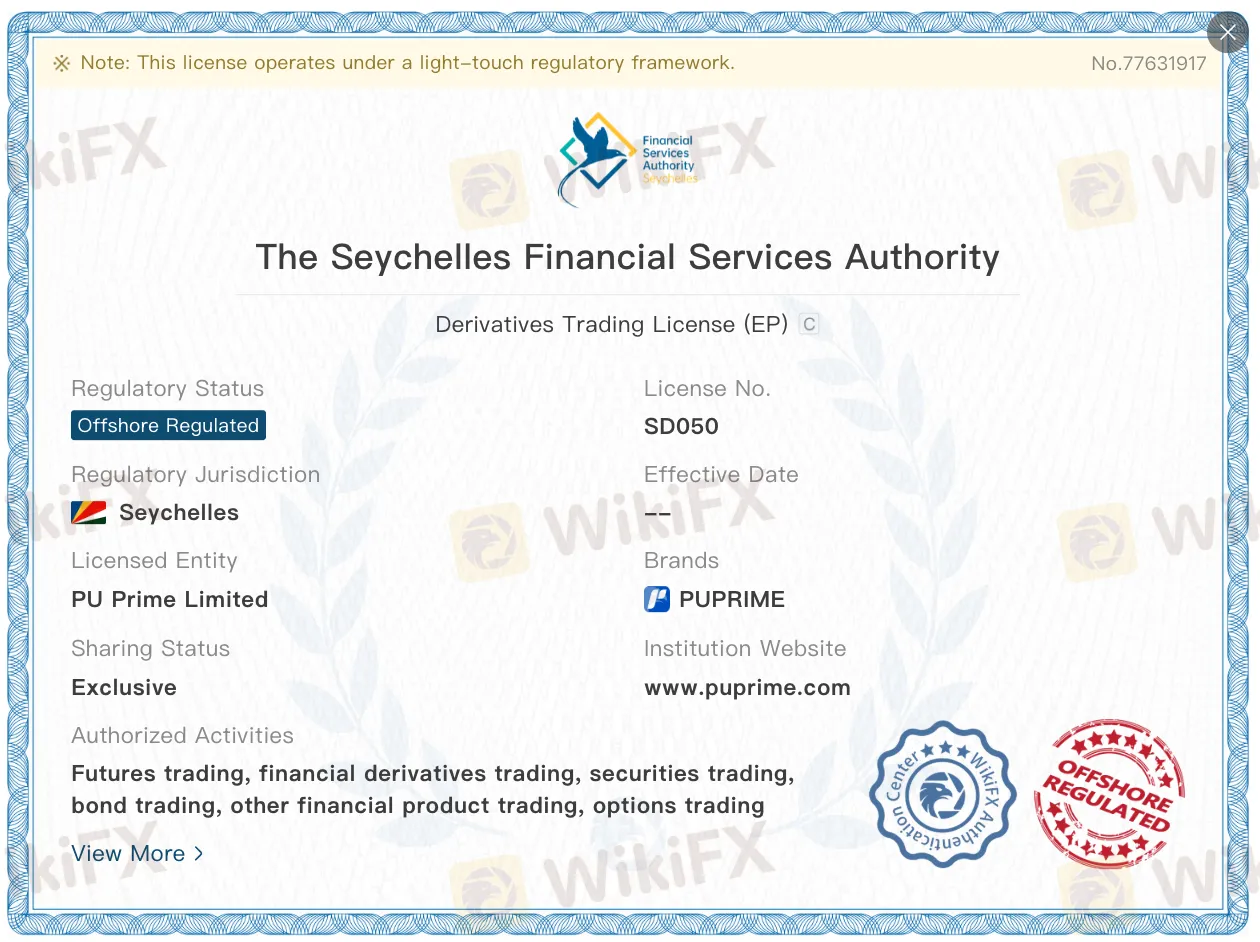
While offshore licences allow brokers to operate internationally, the regulatory framework may differ from that of major onshore authorities. Requirements relating to investor protection, enforcement, and reporting may vary depending on the jurisdiction.
From a PU Prime review perspective, the Seychelles licence supports the brokers global operations, although the level of oversight may not be equivalent to that of regulators such as ASIC.
Multi Jurisdictional Regulation and Its Implications
PU Prime operates under a multi jurisdictional regulatory structure spanning Australia, South Africa, and Seychelles. This framework allows the broker to serve clients across different regions while adhering to the regulatory requirements of each authority.
However, regulatory standards are not uniform across all jurisdictions. While ASIC is known for its strict oversight, offshore regulators may apply different levels of supervision. Clients may be onboarded under different entities depending on their geographical location, which can affect the level of investor protection available.
For those conducting a review PU Prime, it is important to understand which regulatory entity governs their trading account. This determines the specific protections, obligations, and dispute resolution mechanisms applicable to the client.
The Role of Regulation in Broker Assessment
Regulation is a key factor in evaluating brokers, as it establishes the framework within which they operate. Licensed brokers are generally required to maintain transparency, safeguard client funds, and comply with financial reporting obligations.
The presence of multiple licences from recognised authorities can enhance confidence in a brokers operational structure. At the same time, regulation does not eliminate all risks associated with trading, and differences in jurisdiction should be taken into account.
From a PU Prime regulation standpoint, the broker demonstrates a structured and multi jurisdictional approach to compliance. While the level of protection may vary depending on the governing entity, the overall regulatory coverage contributes to its relatively strong standing on WikiFX.
For those considering the broker PU Prime, it is important to evaluate both the regulatory authorities involved and the specific entity under which their account is registered. This ensures a clearer understanding of the protections and conditions associated with trading under PU Prime.
Disclaimer:
The views in this article only represent the author's personal views, and do not constitute investment advice on this platform. This platform does not guarantee the accuracy, completeness and timeliness of the information in the article, and will not be liable for any loss caused by the use of or reliance on the information in the article.
WikiFX Broker
Latest News
Mtxotu Review 2026: Is this Forex Broker Legit or a Scam?
 WikiFX
Why Malaysian Crypto Investors Should Pay Attention to Quantum Computing
WikiFXMEGA FUSION Review: Regulation, Licences and WikiScore Analysis
WikiFXEvest Review 2026: Is This Broker Regulated or a Scam?
WikiFXSuxxessFX Review: Scam or Legit Broker? Unbiased Analysis
WikiFXIs CITY INDEX Legit or a Scam? Read This In-depth Review
WikiFXCapital Collaboration Analysis Report
WikiFXPrince Group Scandal Deepens: $4 Billion Laundering Network Exposed
WikiFXConflict Within US Administration Over Iran Policy: NCTC Director Resigns
WikiFXFed Faces 'Twin Nightmare' as Energy Spikes and Labor Data Soften
WikiFXCurrency Calculator
USD

CNY
Current Rate:0
Amount
USD
Available
CNY
Calculate 