

Global Broker Regulation Inquiry App
About WikiFX
English
简体中文
繁體中文
English
Pусский
日本語
ภาษาไทย
Tiếng Việt
Bahasa Indonesia
Español
हिन्दी
Filippiiniläinen
Français
Deutsch
Português
Türkçe
한국어
العربية
Safe Haven No More? Gold Defies Crisis Logic as War and Oil Shock Shake Markets
Abstract:Safe Haven No More? Gold Defies Crisis Logic as War and Oil Shock Shake Markets Gold’s failure to react to escalating conflict in the Middle East is beginning to unsettle investors, raising serious questions about the metal’s role as a safe haven in today’s markets. As the war involving the United States, Israel and Iran moved deeper into its third week, financial tensions have intensified. Oil prices surged past $100 per barrel following Iran’s move to shut the Strait of Hormuz, a vital artery for global energy flows. Equity markets have slipped under the weight of uncertainty. Yet, in a striking break from historical patterns, gold has remained largely unmoved. Prices have hovered around $5,000 per ounce, with only marginal daily shifts. Spot gold has stayed close to $5,001, while futures have edged up by just a fraction. In previous crises of this scale, such stability would have been unthinkable. Gold has traditionally surged during geopolitical shocks, acting as a financial shelt
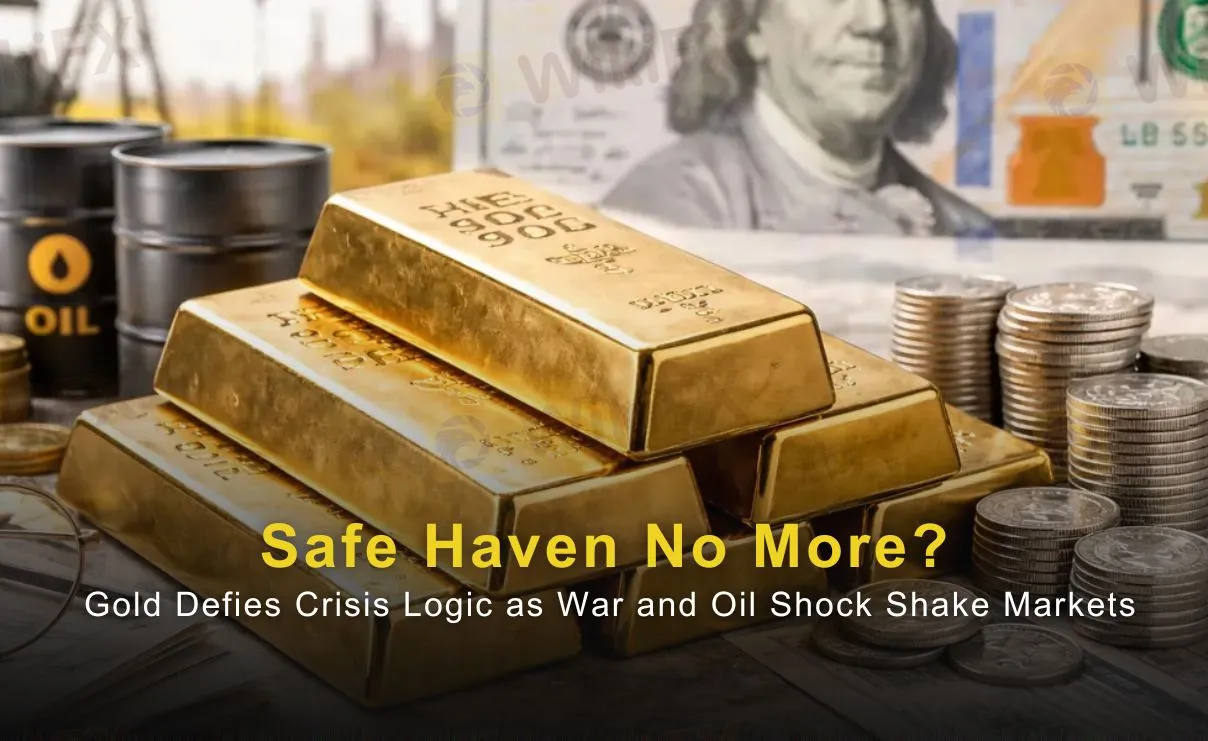
Gold‘s failure to react to escalating conflict in the Middle East is beginning to unsettle investors, raising serious questions about the metal’s role as a safe haven in todays markets.
As the war involving the United States, Israel and Iran moved deeper into its third week, financial tensions have intensified. Oil prices surged past $100 per barrel following Irans move to shut the Strait of Hormuz, a vital artery for global energy flows. Equity markets have slipped under the weight of uncertainty. Yet, in a striking break from historical patterns, gold has remained largely unmoved.
Prices have hovered around $5,000 per ounce, with only marginal daily shifts. Spot gold has stayed close to $5,001, while futures have edged up by just a fraction. In previous crises of this scale, such stability would have been unthinkable. Gold has traditionally surged during geopolitical shocks, acting as a financial shelter in times of stress.
This time, however, that instinctive flight to safety appears to be missing.
The contrast with past conflicts is evident. During the early stages of the Russia Ukraine war, gold prices climbed sharply as investors rushed to protect their wealth. Sanctions and global uncertainty drove central banks, particularly in emerging economies, to accumulate gold at record levels in a bid to reduce exposure to the US dollar.
Now, despite similar or even greater geopolitical risks, that momentum has stalled.
A key reason lies in shifting expectations around US monetary policy. Markets are increasingly bracing for the possibility that the Federal Reserve may hold back on cutting interest rates or even tighten policy further to contain inflation, which is being fuelled by rising energy costs. Higher interest rates tend to strengthen the dollar, making yield bearing assets more attractive than gold, which offers no income.
The dollars resurgence is proving critical. As it strengthens, gold becomes more expensive for international investors, dampening demand. At the same time, the dollar itself is reclaiming its status as a preferred safe haven, drawing capital away from precious metals.
Golds earlier rally has also left it vulnerable. Having already reached record highs this year, the metal may have exhausted much of its upward momentum. Investors who positioned early have less incentive to push prices higher, even in the face of geopolitical turmoil.
More concerning, however, is a growing shift in how gold is perceived. Analysts suggest the metal is no longer viewed purely as a defensive asset. Instead, its recent volatility has led some investors, particularly risk averse institutions such as central banks, to treat it with greater caution. This change in sentiment could have lasting implications for demand.
The current situation leaves markets at a critical point. Golds muted response is not just unusual. It may signal a deeper transformation in global investment behaviour.
Looking ahead, the metals direction will depend heavily on two factors. First, any clear indication from the Federal Reserve that interest rates will be cut could quickly revive demand for gold, especially if inflation remains persistent. Second, the duration of the conflict will be crucial. While some investors appear to expect a relatively contained crisis, a prolonged or expanding war could force a reassessment.
If tensions intensify and economic damage spreads, gold may yet reclaim its traditional role. For now, its silence is striking and increasingly unsettling.
In a world facing rising geopolitical risk and economic fragility, golds failure to respond is more than a curiosity. It is a warning that long standing assumptions may no longer hold, leaving investors exposed in ways they may not fully understand.

Disclaimer:
The views in this article only represent the author's personal views, and do not constitute investment advice on this platform. This platform does not guarantee the accuracy, completeness and timeliness of the information in the article, and will not be liable for any loss caused by the use of or reliance on the information in the article.
WikiFX Broker
Latest News
eToro Review 2026: Regulatory Lawsuits, Clone Scams, and Withdrawal Complaints
 WikiFX
Why Betting Your Entire Account Triggers Early Margin Calls
WikiFXFed dissenters explain 'no' votes, saying they disagreed with hinting next move would be a cut
WikiFXSVSFX Review 2026: Revoked Regulation and Critical Risk Signals
WikiFXUK exports to U.S. plunge by 25% after Trump's 'liberation day' tariffs blitz
WikiFXCurrency Calculator
USD

CNY
Current Rate:0
Enter amount
USD
Redeemable Amount
CNY
Calculate 