Abstract:When traders ask, "Is Pepperstone safe or a scam?" they are dealing with a basic problem in the trading world. On one side, Pepperstone is a well-known broker globally, with licenses from some of the strictest financial regulators. On the other side, ongoing user complaints raise serious questions about how reliable it is. Answering this question needs more than just a simple "yes" or "no." It requires a careful look at the evidence.
This article works as an investigative report, designed to break down the puzzle of Pepperstone's reputation. We will go beyond marketing claims and look at objective, checkable data taken directly from WikiFX, a global broker regulation inquiry platform. By looking at its regulatory status, client protection measures, and most importantly, the patterns found within 29 documented user complaints, we aim to provide a clear view of Pepperstone's trustworthiness. Our goal is not to make a final judgment, but to give you the data needed to make your own inform

When traders ask, “Is Pepperstone safe or a scam?” they are dealing with a basic problem in the trading world. On one side, Pepperstone is a well-known broker globally, with licenses from some of the strictest financial regulators. On the other side, ongoing user complaints raise serious questions about how reliable it is. Answering this question needs more than just a simple “yes” or “no.” It requires a careful look at the evidence.
This article works as an investigative report, designed to break down the puzzle of Pepperstone's reputation. We will go beyond marketing claims and look at objective, checkable data taken directly from WikiFX, a global broker regulation inquiry platform. By looking at its regulatory status, client protection measures, and most importantly, the patterns found within 29 documented user complaints, we aim to provide a clear view of Pepperstone's trustworthiness. Our goal is not to make a final judgment, but to give you the data needed to make your own informed decision about the real-world risks and benefits of trading with this broker.
The Verdict in a Nutshell
For traders seeking an immediate answer, the evidence from WikiFX shows a two-sided picture. Pepperstone is a legitimately regulated company, not an outright scam. It holds top-tier licenses and has been running for over ten years. However, the day-to-day reality for some users presents notable risks, mainly centered around withdrawals, platform stability, and transparency. The high volume of user-reported issues is a significant factor that cannot be ignored.
To break down these conflicting signals, we've summarized the core findings in a clear, easy-to-scan format. This table compares the arguments for Pepperstone's safety against the documented red flags that fuel user concerns.
This summary highlights the central problem: a broker that is compliant on paper but faces significant operational challenges in practice. The following sections will explore these points in greater detail.
Understanding the Trust Signals
Despite the complaints, Pepperstone has built the reputation of a major forex player. This is not by accident. The broker's foundation is built on several key pillars that signal legitimacy and safety to potential clients. Understanding these strengths is crucial to forming a balanced view.
A Strong Wall of Regulation
The single most convincing argument for Pepperstone's safety is its robust regulatory framework. A broker's willingness to subject itself to oversight from top-tier regulators is a primary indicator of its legitimacy. These agencies enforce strict financial standards, require client fund protection, and provide a legal framework for resolving disputes. According to WikiFX, Pepperstone is regulated across multiple jurisdictions by highly respected bodies:
· Australian Securities and Investments Commission (ASIC): License number 414530.
· Cyprus Securities and Exchange Commission (CySEC): License number 388/20.
· Financial Conduct Authority (FCA) in the UK: License number 684312.
· Dubai Financial Services Authority (DFSA): License number F004356.
· Securities Commission of The Bahamas (SCB): License number SIA-F217.
Operating under the watch of entities, such as the ASIC and the FCA, means Pepperstone must follow strict capital requirements and operational protocols designed to protect traders.
Strong Client Protection
Beyond licensing, Pepperstone uses several industry-standard measures to protect client funds. These are not merely suggestions but often requirements under their regulatory obligations.
· Segregated Accounts: This is a critical feature. It means client funds are held in accounts separate from the company's operational funds. In the unlikely event of Pepperstone's bankruptcy, this separation prevents client capital from being treated as a company asset and used to pay creditors.
· Negative Balance Protection: This measure ensures that traders cannot lose more than they have deposited in their account. It protects clients from owing the broker capital in the event of extreme market changes that cause a position to lose massive amounts.
· Investor Compensation Scheme: As a regulated entity in jurisdictions such as the UK and Cyprus, clients are often covered by investor compensation schemes (e.g., FSCS in the UK). This provides a crucial safety net, offering a level of compensation if the broker fails.
Ten Years of Operation
Founded in 2010, Pepperstone has been operating for over ten years. In the fast-moving forex and CFD industry, longevity is a significant trust signal. Quick scams rarely survive for more than a few years. A 15-year track record suggests a sustainable business model and the ability to navigate complex market cycles and regulatory changes. This long-standing presence, combined with a powerful technology stack offering MT4, MT5, cTrader and TradingView, shows a serious, well-funded operation. With a comprehensive suite of platforms, traders can explore these advanced options and their features on the official Pepperstone website.
The Big Problem
While the regulatory framework is strong, it is impossible to ignore the significant volume of negative user feedback. The WikiFX alert citing “29 user complaints” is the primary driver behind the “Is Pepperstone a scam?” query. As risk analysts, we look for patterns. A single complaint can be unusual; a series of similar complaints points to a systematic issue. Here, we will categorize and analyze the most common and serious issues reported by users on WikiFX.
The Withdrawal Maze
The most common and concerning category of complaints revolves around withdrawals. A broker's primary function, after helping trades, is to return funds to clients upon request. Failures in this aspect destroy trust faster than any other issue.
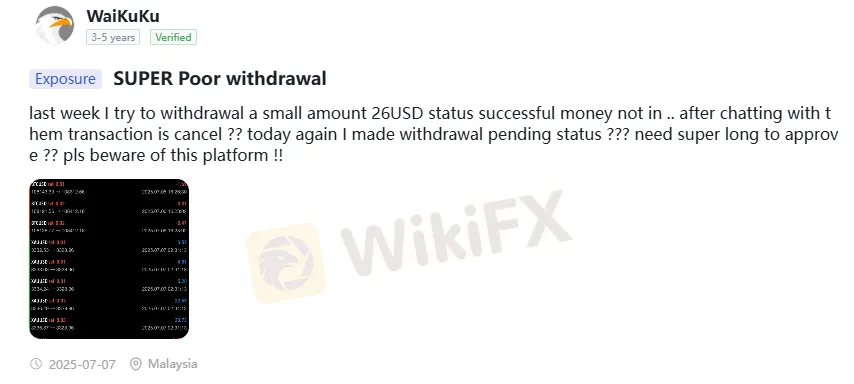
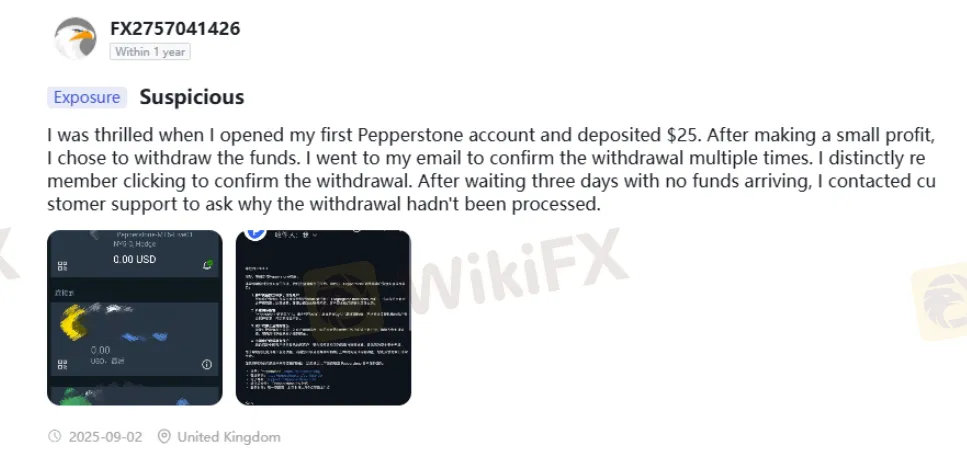
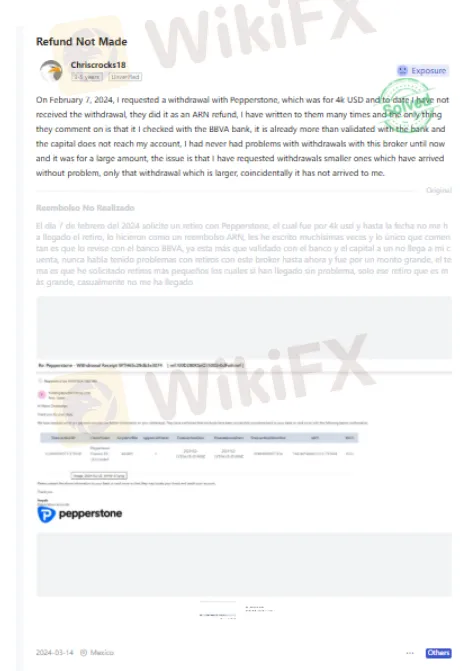
· Delayed and Cancelled Withdrawals: Multiple users report significant delays. A user from Malaysia described attempting a small $26 withdrawal that was marked “successful” but never arrived, only to be cancelled after they contacted support. Another user from the UK waited three days for a withdrawal that was never processed. A user in Mexico reported a $4,000 withdrawal from February 2024 that, as of March, had still not arrived in their bank account, despite smaller, later withdrawals being processed correctly.
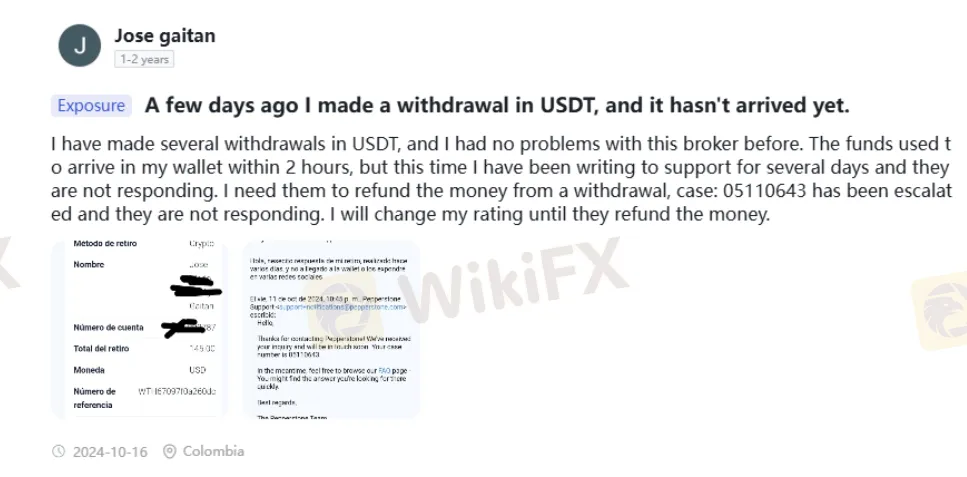
· USDT and Crypto-Specific Issues: Several reports highlight problems with USDT (Tether) withdrawals. A Colombian user, who previously had no issues, reported a USDT withdrawal case that escalated, but received no response from support for days. This pattern suggests potential bottlenecks or procedural issues, specifically with crypto-related transactions.
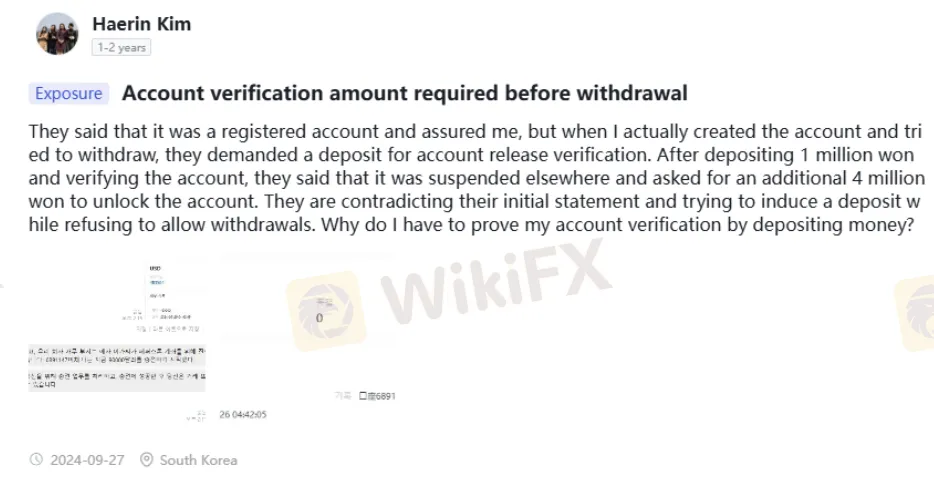
· Excessive and Strange Verification: The most alarming withdrawal reports involve strange demands from the broker. A user from South Korea reported being asked to deposit *more* money to “release” their withdrawal for account verification. This practice is a major red flag and is completely contrary to standard anti-money laundering (AML) procedures.
Deposit and Funding Problems
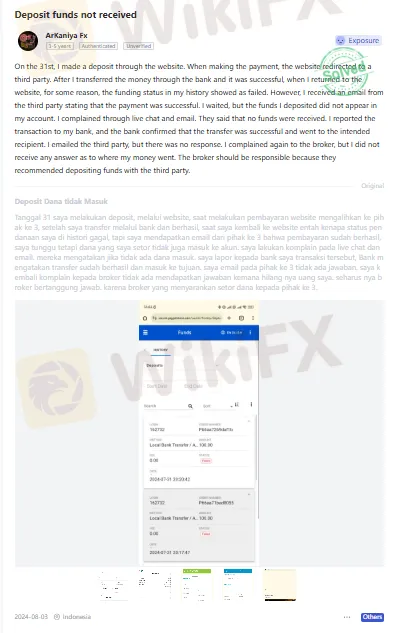
Problems are not limited to withdrawing funds. Some users have experienced issues with funding their accounts. One detailed report from a user in Indonesia described making a deposit that was routed through a third-party payment processor recommended by Pepperstone. Though the user's bank and the third party confirmed the transfer was successful, the funds never appeared in their trading account, and the broker allegedly claimed no funds were received. This raises questions about the security and reliability of the payment channels Pepperstone works with.
Trading Fairness Questions
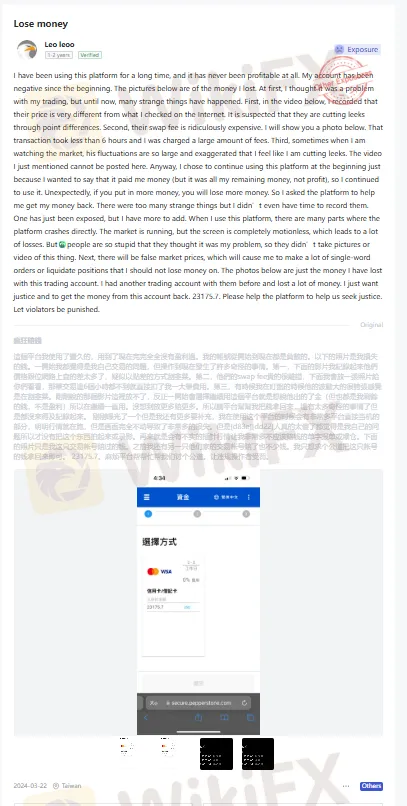
Beyond financial transactions, some complaints strike at the heart of trading fairness and platform reliability. A lengthy and detailed report from a Taiwanese user (`Leo leoo`) who had been using the platform for a long time made several serious claims:
· Price Differences: The user recorded video evidence showing significant differences between Pepperstone's quoted prices and the broader market, suggesting unfair play in spread manipulation.
· Extremely High Swap Fees: The user provided a screenshot of a trade held for less than six hours that was charged a “ridiculously expensive” swap fee.
· Platform Problems: The user reported frequent platform crashes when the market was moving, but their screen was frozen, leading to significant losses.
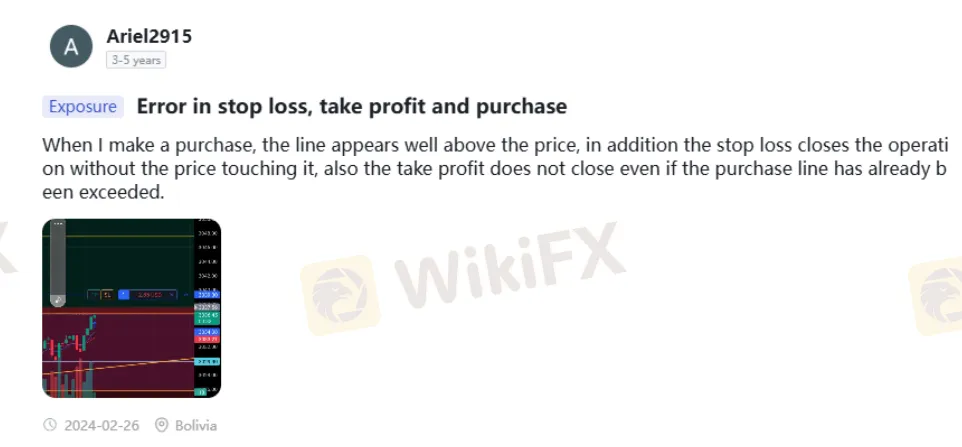
· Improper Stop-Loss Execution: Another user from Bolivia complained that stop losses were triggered even when the price had not reached the stop-loss level.
Customer Support: Sometimes Good, Sometimes Bad
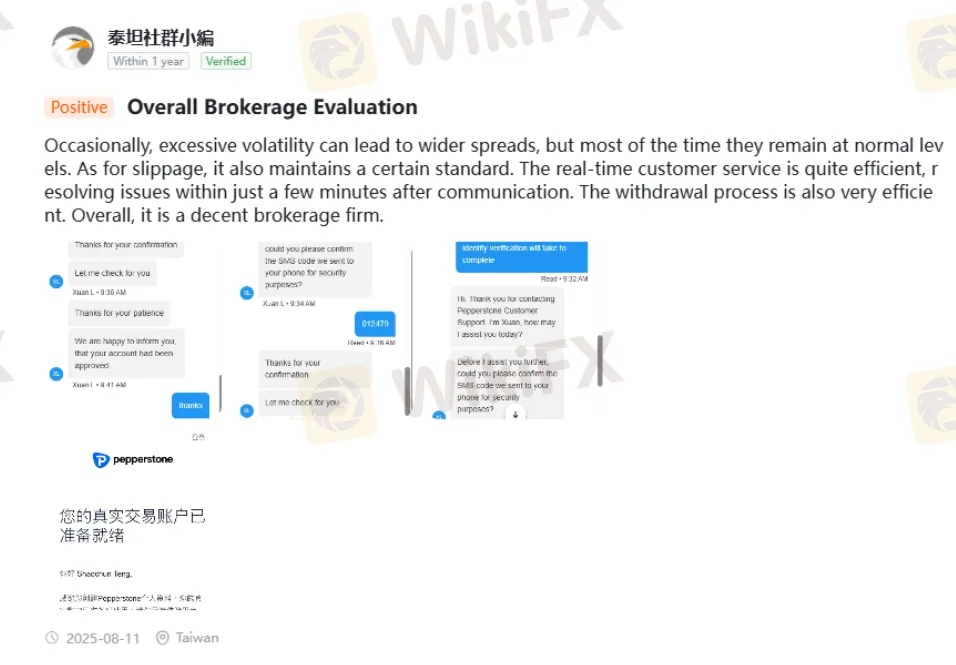
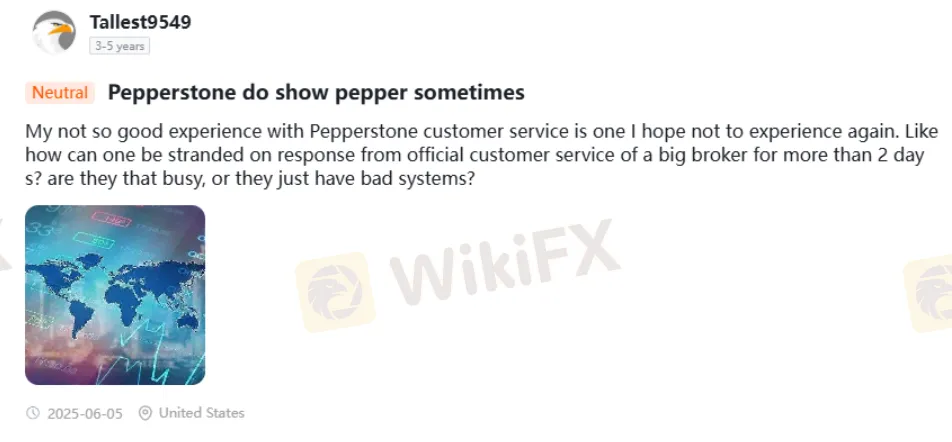
User experiences with customer support are very different. A user from Taiwan praised the real-time chat for being “quite efficient,” resolving issues in minutes. In contrast, a user from the United States expressed frustration after being “stranded on response” for more than two days. This inconsistency suggests that while the support infrastructure exists, it may be understaffed or unreliable, leaving some traders without help when they need it most.
Looking at Critical Red Flags
Beyond the typical Pepperstone complaints about service and withdrawals, the WikiFX report highlights two “Danger” level warnings that deserve serious, focused analysis. These red flags go beyond operational problems and touch upon the core transparency and security of the broker.
The Mystery of the Missing Offices
For a global broker promoting its presence in key financial centers, physical transparency is a cornerstone of trust. However, WikiFX field survey teams have issued alarming reports:
· Pepperstone United Kingdom: Verified as having “No Physical Presence Found.”
· Pepperstone Australia: A visit to the listed address resulted in the conclusion “No Office Found.”
It is crucial to note that WikiFX surveyors *did* confirm operational offices in Cyprus and Dubai. However, the absence of a verifiable physical presence at its registered addresses in two of its primary regulatory jurisdictions (the UK and Australia) is a significant blow to transparency. While companies can use virtual offices or administrative addresses, for a financial institution of this size, the inability for an independent surveyor to locate a functional office is a serious concern. It raises questions about the company's stated operational footprint and creates a perception of secrecy that is unsettling for any investor.
Third-Party Scams vs Broker Issues
It is essential to tell the difference between direct broker misconduct and instances where a broker's platform is exploited by external scammers. A heartbreaking report from a Taiwanese user (`詐騙真的太無情可怕`) details being lured into a romance scam. The fraudster, posing as a securities analyst, gained the user's trust and directed them to download a specific app and deposit over a million dollars to trade on Pepperstone. When the user tried to withdraw, they were told to pay a “personal income tax” first, at which point they realized it was a scam.
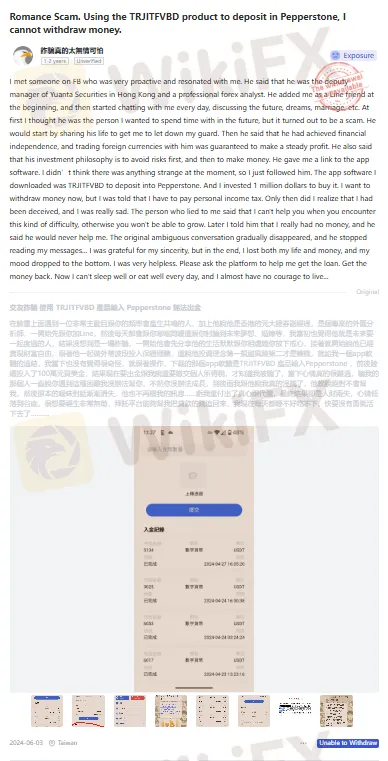
This case appears to be a third-party fraud, not a direct action by Pepperstone itself. Scammers created a fraudulent app or system that likely used Pepperstone's name and platform as a cover of legitimacy. This highlights a critical security risk for all traders:
· Always use the official source: Never deposit funds, download software, or manage your account through links provided by unverified individuals on social media or messaging apps.
· Be wary of “guaranteed profits”: Legitimate trading involves risk. Promises of guaranteed, steady profits are a hallmark of investment scams.
This distinction is important. While Pepperstone was the platform involved, the primary failure was a result of sophisticated social engineering by an external party. To ensure security, all account funding and management should be conducted exclusively through the official Pepperstone website, never through third-party links.
Final Analysis: Is Pepperstone Safe?
After a comprehensive analysis of the regulatory framework, user complaints and critical red flags documented by WikiFX, we return to the core question. The evidence shows that Pepperstone is not a scam in the traditional sense of an unregulated, fake entity designed solely to steal deposits. It is a long-standing broker with an impressive collection of top-tier licenses.
However, the label “safe” is not absolute. The broker is troubled by a significant volume of patterned complaints regarding critical operational functions, most notably withdrawals. The issues of platform instability and inconsistent customer support, combined with the deeply concerning “missing office” reports, paint a picture of a broker whose on-paper credentials do not always align with the real-world user experience. It operates in a grey area between being a fully trusted broker and an outright risk.
Therefore, the decision to use Pepperstone depends entirely on your personal risk tolerance and trading priorities.
· Who might consider Pepperstone: Experienced traders who prioritize access to a wide array of platforms (MT4/5, cTrader, TradingView) and can tolerate potential delays in customer service or withdrawals. These traders should be disciplined enough to perform regular, small test withdrawals to continuously verify the process and should avoid leaving large, idle sums of money in their accounts.
· Who should be cautious: Beginner traders who may be more vulnerable to platform problems or unhelpful support. Anyone for whom fast, smooth, and reliable withdrawals are a top priority should think twice. Traders who are troubled by the lack of transparency highlighted by the “missing office” reports and the sheer volume of negative feedback should likely look for an alternative with a cleaner operational record.
Ultimately, the choice is yours, but it must be an informed one. The evidence from real user experiences suggests that while Pepperstone is a legitimate entity, proceeding with caution is not just advisable—it's essential. If, after weighing these risks, you believe Pepperstone's offerings align with your trading strategy, we recommend starting with a demo account or a very small initial deposit, which can be set up via their official platform.
The forex market is evolving fast. Stay updated with the latest trends and strategies on the new WikiFX app. Download now by scanning the QR code below.