

Global Broker Regulation Inquiry App
About WikiFX
English
简体中文
繁體中文
English
Pусский
日本語
ภาษาไทย
Tiếng Việt
Bahasa Indonesia
Español
हिन्दी
Filippiiniläinen
Français
Deutsch
Português
Türkçe
한국어
العربية
China Delivers 5% Growth Target, Yet December Data Reveals Deepening Consumption and Property Cracks
Abstract:China met its 5% annual growth target for 2025, but a sharp deceleration in December retail sales and a deepening property crisis suggest significant headwinds for the yuan and commodity currencies.
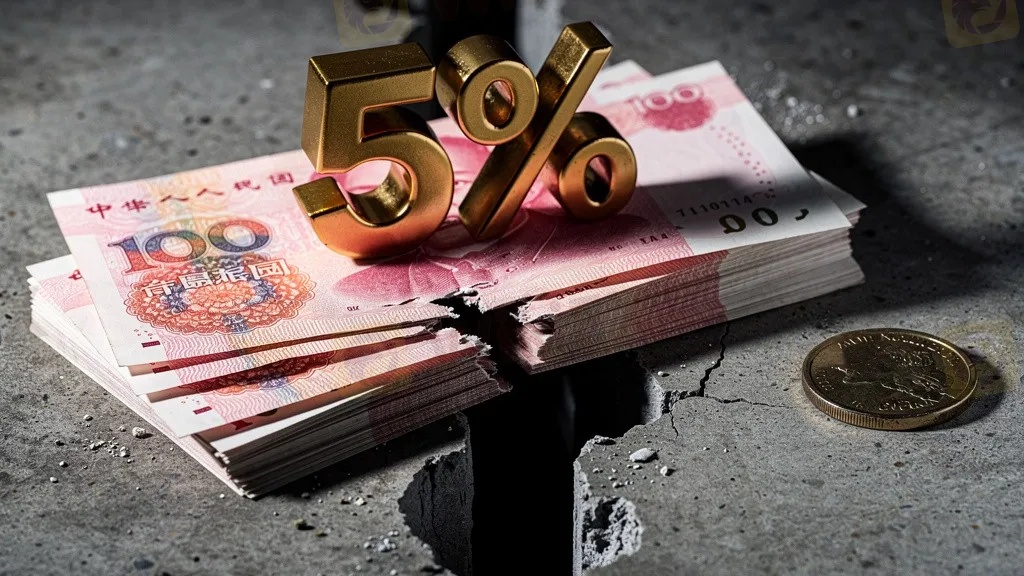
China successfully achieved its annual growth target of 5.0% for 2025, according to data released by the National Bureau of Statistics on Monday. However, the surface-level stability masks a deteriorating economic picture in the fourth quarter, highlighted by a collapse in consumption momentum and an intensifying real estate bust.
Underlying Weakness in Q4
While the full-year figure met Beijing's psychological benchmark, the fourth-quarter GDP growth slowed to 4.5%, signaling a loss of steam heading into 2026. The most alarming signal came from December's activity data:
- Retail Sales: Plummeted to a mere 0.9% year-on-year growth (down from the annual average of 3.7%), indicating that consumer confidence has evaporated despite government stimulus efforts.
- Property Sector: Real estate development investment contracted by a staggering 17.2% for the year. New home sales by value plunged 12.6%, creating a massive drag on the broader economy.
Housing Deflation Persists
The property market, once the engine of Chinese growth, continues to act as a deadweight. In December, home prices across 70 major cities accelerated their decline.
- Tier-1 Cities: Even economic hubs like Beijing and Shanghai are not immune, with secondary market prices falling 8.5% and 6.1% year-on-year, respectively.
- Broad Decline: New home prices in lower-tier cities dropped between 2.5% and 3.7%, confirming that the deflationary pressure is systemic rather than localized.
Market Implications: AUD and CNY
The disconnect between the headline GDP beat and the dismal monthly data has created a complex trading environment. The Chinese Yuan (CNY) remains under pressure as the weak consumer data fuels expectations for aggressive monetary easing by the PBOC in Q1 2026.
For proxy currencies, particularly the Australian Dollar (AUD) and New Zealand Dollar (NZD), the data presents a bearish signal. While the NZD saw a brief knee-jerk jump on the headline GDP print, the lack of consumer demand in China—Australias largest export market—suggests capped upside for commodities. Traders should anticipate volatility in the AUD/USD pair as the market digests the reality of China's “hard landing” in the property sector.
Disclaimer:
The views in this article only represent the author's personal views, and do not constitute investment advice on this platform. This platform does not guarantee the accuracy, completeness and timeliness of the information in the article, and will not be liable for any loss caused by the use of or reliance on the information in the article.
WikiFX Broker
Latest News
Land Prime Regulatory Status: A Complete Guide to Its Licenses and Company Structure
 WikiFX
Before Hitting Buy: Five Core Lessons for New Forex Traders
WikiFXJRJR (金荣中国) Review: A Deep Dive into Compromised Accounts and Missing Funds
WikiFXBravofxtrade Exposure: No Official Website Link, No Regulation, Only Scam Records
WikiFXVCP Markets Review 2026: Is this Forex Broker Legit or a Scam?
WikiFXIs FXGlobe Broker Safe? Regulation and Rating Review 2026
WikiFXBlueberry Markets Review: Examining the Latest User Complaints in 2026
WikiFXMSquare Review 2026: Is this Forex Broker Legit or a Scam?
WikiFXCHINA FUTURES Regulation: Status of China Securities Futures
WikiFXMalaysia’s RM1.47 Billion Scam Crisis: How Thousands Were Tricked Through Social Media
WikiFXCurrency Calculator
USD

CNY
Current Rate:0
Enter amount
USD
Redeemable Amount
CNY
Calculate 