Abstract:As WikiEXPO Dubai concludes successfully, we had the pleasure of interviewing Dolly Ramaiya, Founder and Senior Executive Officer of Truleum Venture Partners Limited, an asset and fund tokenization focused regulated firm based in Dubai International Financial Center, UAE. With over 18 years of experience in the GCC region, predominantly in the fintech sector, Dolly has been a driving force behind the growth of several transformative companies.
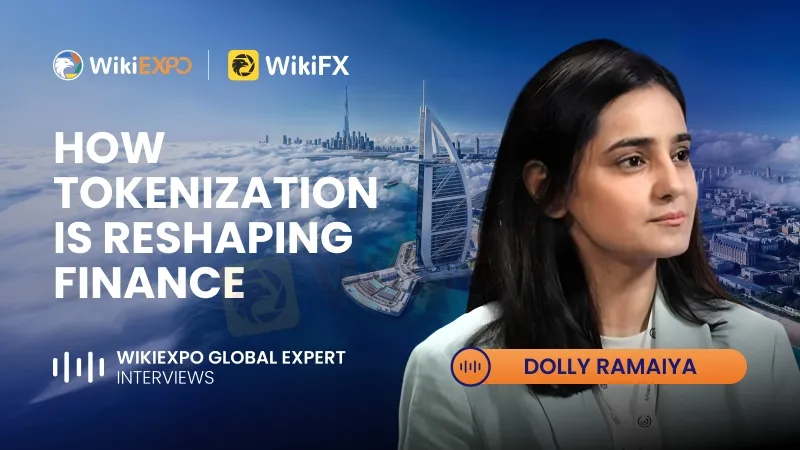
As WikiEXPO Dubai concludes successfully, we had the pleasure of interviewing Dolly Ramaiya, Founder and Senior Executive Officer of Truleum Venture Partners Limited, an asset and fund tokenization focused regulated firm based in Dubai International Financial Center, UAE. With over 18 years of experience in the GCC region, predominantly in the fintech sector, Dolly has been a driving force behind the growth of several transformative companies.
Dolly also operates a venture studio out of Dubai focused on building early-stage technology focused startups from ground up working hand-in-hand with Founders, bridging the gap between venture building and investment, aligning operational and intellectual capital to empower early-stage companies
Prior to building her own firm, Dolly has been a founding team member of YAP, the UAE's first independent digital banking platform, where she played a critical role in establishing strategic partnerships, spearheading regional expansion, and structuring regulatory frameworks. Her expertise extends to organizational restructuring, regulatory compliance, and leading major M&A projects with entities like C3 Edenred.
Dollys career reflects a front-row seat to the “Fintech Revolution,” witnessing the evolution of traditional banking, payment systems, and cards into a thriving ecosystem of digital innovation.
Part 1: The Future of Digital Banking and Tokenization
Q1: Youve witnessed the fintech revolution firsthand in the GCC region. From your early days at American Express to founding Truleum Venture Partners, what major shifts have you observed in the way digital banking has evolved?
DR: Over the last two decades, the GCC has moved from product-driven financial institutions to technology-driven ecosystems. When I started at American Express, innovation was internal — built around products, customer segmentation, and brand trust. Banks were self-contained universes.
Today, the regions transformation is about interoperability and open architecture. The rise of APIs, regulatory sandboxes, digital banking licenses, and instant payment rails has shifted the focus from banking as a financial partner to banking as infrastructure.
Another significant shift is the regulatory maturity. Regulators in the UAE, Saudi Arabia, and Bahrain have evolved from observers to enablers, driving digital policy, virtual asset frameworks, and fintech licensing models. This alignment between innovation and governance is what inspired the creation of Truleum Venture Partners — a regulated fund manager at the intersection of traditional assets and digital assets, with a strong focus on transparency, compliance, and technological evolution.
Q2: Truleum Venture Partners focuses on Fund management and tokenization of financial assets.. How do you see tokenization transforming financial and technological ecosystems?
DR: Tokenization, in our view, is not a buzzword — its a structural innovation in how financial markets operate. It brings the precision of blockchain to the discipline of fund management.
At our firm, we are building regulated tokenized fund structures that enable transparency on ownership, operational efficiency, instant settlement, and secondary liquidity for traditionally illiquid assets — such as venture capital interests, private equity, and real estate funds.
The value lies in efficiency and accessibility. Tokenization allows institutional and qualified investors to participate in traditional instruments represented natively on chain, while providing managers with digital rails for issuance, compliance, and reporting.
Over time, we believe tokenized financial instruments will redefine how investors engage with private markets — making them more transparent, auditable, and globally connected. What we‘re building is a regulated investment structure with a digital wrapper, compliant within the DFSA’s and DIFCs framework, designed for a new era of funds, real world assets and investor participation.
Q3: In your opinion, what are the next frontiers of innovation for fintech and venture ecosystems in the Middle East—particularly around payments, digital identity, and embedded finance?
DR: The next wave of fintech innovation in the Middle East will come from integration, not fragmentation.
Payments will become invisible — seamlessly embedded into platforms and industry verticals like healthcare, logistics, and real estate. Digital identity will emerge as the trust layer of this new economy, enabling secure onboarding, KYC, and cross-border compliance powered by blockchain verification.
Tokenized finance — including fund interests, securities, and real-world assets — will expand the regions capital markets beyond traditional exchanges. The combination of regulated digital assets, interoperable payment systems, and AI-driven compliance will unlock a new level of financial inclusion and efficiency.
For operators like us, this represents a generational opportunity to bridge institutional capital with digital infrastructure — allowing investors, issuers, and fund managers to operate in a more connected, transparent, and global ecosystem.
Part 2: Balancing Compliance with Innovation
Q1: WikiEXPO has become one of the key global stages for fintech and digital finance collaboration. How important are such ecosystems in supporting startups and connecting them to investors and regulators?
DR: Ecosystems like WikiEXPO are vital because they translate innovation into dialogue. For startups and regulated players alike, visibility and credibility are as important as capital.
These platforms create the space for constructive interaction between innovators, institutional investors, and regulators — which is particularly critical in emerging sectors like tokenization, DeFi, and AI in finance.
Global forums like these, allow regulated entities from the GCC to demonstrate that compliance and innovation are not mutually exclusive. They also allow investors to discover credible, licensed pathways to engage with digital asset opportunities — a key part of building trust in this evolving landscape.
Q2: WikiFX emphasizes data-driven transparency in the trading and investment industry. From your perspective, how can fintech platforms use data more responsibly to empower users?
DR: Data transparency should not end at reporting — it should start with design.
Fintech platforms and tokenized financial instruments have a unique responsibility to transform data into clarity, not complexity. We view transparency as an operational principle, not a regulatory checkbox. Blockchain-based systems enable real-time auditing, immutable record-keeping, and traceable asset flows, which redefine how investors perceive trust.
Responsible data use means empowering investors to make informed decisions — by ensuring data accuracy, contextual relevance, and user control. As the digital investment industry grows, those who prioritize ethical data frameworks will lead the trust economy.
Q3: What message would you share with young women entering the fintech, investment management & venture-building space today?
DR: The most important thing I‘ve learned is that credibility compounds faster than confidence. You don’t have to have all the answers — you just have to keep showing up and asking the right questions.
Fintech is one of the few sectors where the barriers to entry are intellectual, not institutional. For young operators entering this space, my advice is simple: dont wait to be validated by the ecosystem; start shaping it.
I personally believe leadership is not about fitting into frameworks — its about designing new ones. The future of finance will belong to those who bring diverse perspectives and bold ideas into highly regulated and traditionally (male-dominated) spaces — and turn them into sustainable, credible businesses.
About WikiEXPO Global Expert Interview
As the organizer of WikiEXPO, WikiGlobal is committed to fostering international dialogue and cooperation through offline exhibitions. By engaging with global experts on financial regulation, technology, and governance, WikiGlobal seeks to enhance the integration of fintech and regtech, improve regulatory efficiency and accuracy, and promote industry self-discipline. Through these efforts, we encourage financial institutions to adopt best practices, build a more transparent and resilient ecosystem, and ultimately create a safer trading environment for investors worldwide.