Abstract:Gold and Silver Forecast 2026 offers expert predictions, price insights, and market analysis to help shape your investment decisions.
Gold and silver head into 2026 after an extraordinary 2025 rally that reset expectations for precious metals. By December 22, 2025, Reuters reported gold up ~67% year-to-date and silver up ~138%, with both hitting fresh records amid rate-cut expectations, geopolitical tension, and strong investor demand.
Key drivers investors are watching into 2026
- U.S. monetary policy and real yields: markets pricing two U.S. rate cuts in 2026 can keep real yields pressured—historically supportive for non-yielding metals like gold.
- USD trend: a softer dollar can mechanically lift USD-priced commodities; Reuters noted the dollar fell ~9% in 2025 (worst in eight years).
- Central bank demand: Reuters reported central banks are on track to buy ~850 tons of gold in 2025, reinforcing the official-sector “floor.”
- Industrial cycle for silver: solar, EVs, and data-center buildouts can amplify silvers upside—but recessions or “thrifting” can swing demand quickly.
- Supply tightness and positioning: persistent deficits and ETF flows can fuel momentum—and volatility—especially in silver.
2026 precious metals forecast table (USD per ounce)
Gold Price Prediction 2026 — forecast ranges from major sources
Silver Price Prediction 2026 — forecast ranges from major sources
Expert opinions and technical signals shaping the precious metals market outlook 2026
What the “consensus” is really saying
The Reuters poll is a useful anchor because it aggregates professional views: gold averaging $4,275 in 2026 and silver averaging $50. The same poll links the 2026 thesis to geopolitical risk, policy uncertainty, central-bank demand (gold), and structural deficits plus tech-sector demand (silver).
What price action is telling markets right now
Late-2025 price behavior matters because it can influence 2026 positioning. Reuters described a strong year-end surge alongside large ETF flows, central-bank demand, and a weaker dollar—conditions that can keep trend-following money involved even after big runs.
Gold Price Prediction 2026
Forecast for gold and silver in 2026 starts with golds “policy hedge” bid
Gold‘s 2026 setup is tied to how investors price inflation persistence vs. rate cuts and how much confidence markets have in fiscal and geopolitical stability. The IMF’s October 2025 outlook still points to muted global growth and inflation gradually cooling—a backdrop where central banks may turn more supportive, but shocks remain possible.
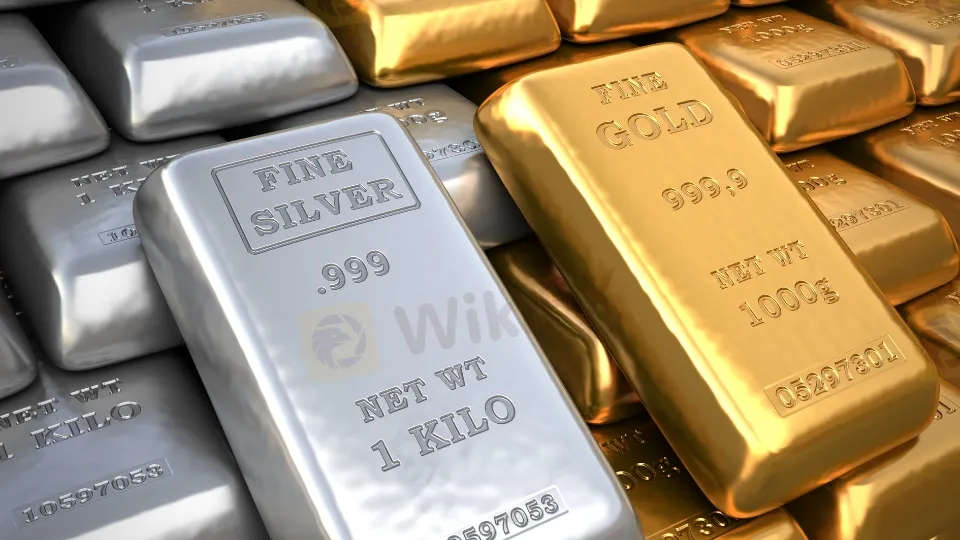
Gold market trends investors are tracking.
1) Interest rates and real yields: If rate cuts arrive faster than inflation falls, real yields can stay compressed—supportive for gold. Reuters explicitly noted the market expectation of two cuts in 2026 as part of the bullish narrative.
2) Central bank buying and reserve diversification: Reuters reported central banks are on pace to buy ~850 tons in 2025, a strong signal that official-sector accumulation remains a key pillar.
3) Geopolitical risk premium: Ongoing conflicts and trade uncertainty were repeatedly cited by Reuters as drivers of safe-haven demand.
Upside and downside scenarios (how the wide ranges happen)
- Upside path (bull case): Goldmans $4,900 by Dec 2026 assumes persistent official demand plus policy easing.
- Base-to-bull consensus: Reuters poll $4,275 average; Heraeus upper band $5,000.
- Downside path (bear case): A “cooling” macro regime can pull gold back toward more conservative baselines—World Banks $3,575 average or the $3,500 correction scenario cited by Capital Economics (via The Times).
Silver Price Prediction 2026
Silver investment outlook hinges on industry as much as macro.
Silver is both a monetary metal and an industrial input, so its 2026 trajectory can diverge sharply from gold—especially if the global economy surprises to the upside (or downside).
Industrial demand: solar, EVs, and data centers as 2026 tailwinds
The Silver Institute highlights how structural technology shifts are changing silver demand:
- Solar PV: PVs share of silver industrial demand grew from ~11% (2014) to ~29% (2024).
- EVs: The Institute cites estimates that EVs use ~25–50 grams of silver per vehicle and ~67–79% more than internal combustion cars.
- Auto demand growth: It cites a forecast for automotive silver demand growing at ~3.4% CAGR (2025–2031), with EVs overtaking ICE vehicles as the primary driver by 2027.
Supply constraints and volatility: why silver can overshoot
Silvers 2025 market stress underscores the “thinness” risk. The Silver Institute (citing Metals Focus presenters) described 2025 as another deficit year, with a 2025 deficit estimate of ~95Moz and cumulative deficits since 2021 adding up to ~820Moz, while also noting tariff concerns and tightness in vault flows.
For 2026 specifically, the Reuters poll says analysts still expect structural deficits to continue, and it lifts the 2026 average to $50.
Gold vs silver: comparative analysis and portfolio positioning
Expected performance profile in 2026
- Gold: typically the lower-volatility “core hedge,” most sensitive to real yields, USD direction, and central bank demand.
- Silver: a “higher beta” expression of the precious metals forecast 2026, with added torque from industrial cycles and tight physical supply.
A live sentiment gauge: the gold–silver ratio
The Silver Institute noted the gold:silver ratio fell from above 107 (April 2025) to ~78 (October 2025), framing it as improving institutional confidence in silver during the rally.
Market drivers to monitor through 2026
The macro dashboard that moves metals
- Fed path vs inflation expectations: watch real yields and the pace of cuts.
- USD strength/weakness: big FX trends can dominate short-term pricing.
- Growth scares or rebounds: recession risk can pressure industrial metals (silver) even if gold holds up.
- Geopolitical and trade shocks: can add a risk premium quickly.
- ETF and physical flows: can accelerate trend moves in both metals.
Investment strategies for gold and silver prices 2026
These are practical frameworks investors commonly use; theyre not personalized financial advice.
- Core + satellite approach (balanced exposure)
Use gold as the core hedge and silver as a satellite growth/volatility position, reflecting silvers dual macro + industrial profile.
- Stagger entries and manage volatility
Heraeus expects a reset/consolidation phase early in 2026, which argues for phased buying rather than single-point timing—especially in silver.
- Define your “regime trigger” indicators.
- If rate cuts accelerate and the USD weakens, that typically supports both metals.
- If growth deteriorates sharply, gold can hold up better while silver may swing with industrial demand.
- Risk controls that match the metal
- For the silver investment outlook, size positions assume wider drawdowns and faster rallies.
- For gold, focus on macro triggers (real yields, policy credibility, geopolitical risk).
Conclusion: The Precious Metals Market Outlook 2026
The Gold Price Prediction 2026 landscape is unusually wide: conservative institutional baselines (World Bank $3,575 avg) sit far below bullish bank targets (Goldman $4,900 by Dec 2026; Heraeus up to $5,000). The gap reflects genuine uncertainty over the 2026 macro regime—whether easing policy and persistent risks dominate, or whether inflation cools cleanly and safe-haven demand fades.
For the Silver Price Prediction 2026, the story is even more two-sided: powerful structural tech demand (solar/EV/data centers) and ongoing deficit narratives support bullish forecasts (Reuters poll $50 avg, Macquarie $57 avg, BofA $65 target), but volatility remains the price of entry.
If you want, I can also turn the forecast tables into a comparison “scorecard” (bull/base/bear) and add a short “what would change the forecast” checklist for each metal.