Abstract:Titan Capital Markets, established in 2021, presents itself as a financial service provider headquartered in Australia. However, a detailed analysis of its regulatory status and user feedback suggests significant risks. With a dangerously low WikiFX Score of 1.45, this broker has been flagged for regulatory irregularities and a high volume of investor complaints regarding withdrawal failures.
Titan Capital Markets, established in 2021, presents itself as a financial service provider headquartered in Australia. However, a detailed analysis of its regulatory status and user feedback suggests significant risks. With a dangerously low WikiFX Score of 1.45, this broker has been flagged for regulatory irregularities and a high volume of investor complaints regarding withdrawal failures.
Is Titan Capital Markets Legit?
When evaluating the safety of a broker, regulatory oversight is the most critical factor. Data indicates that Titan Capital Markets lacks a valid license for its current operations and has faced severe warnings from financial authorities.
Regulatory Status
Titan Capital Markets claims to be regulated in Australia, but the data reveals that its license is not sufficient for the services it provides. Furthermore, it has been blacklisted by other regulatory bodies.
What does “Exceeded” mean?
The status “Exceeded” regarding the ASIC license indicates that the company is operating outside the permitted scope of its license. While the entity “TITAN CAPITAL PTY LTD” holds a registration, it does not possess the necessary authorization to offer the specific financial services it is marketing to retail traders globally.
Philippines SEC Warning
In early 2024, the Philippines Securities and Exchange Commission (SEC) issued a public advisory against Titan Capital Markets. The regulator stated that the entity was operating without the necessary license to sell securities. The advisory explicitly mentioned that the broker's operations exhibited characteristics of a “Ponzi scheme,” where new investor funds were allegedly used to pay “fake profits” to earlier investors.
Titan Capital Markets Complaints and Exposure
Over the last several months, there has been a massive surge in complaints against this broker. Reports from users in India, the UAE, Maldives, Thailand, and Mauritius depict a collapse in services and untrustworthy behavior.
Withdrawal Failures and “Token” Conversion
The most common complaint involves the inability to withdraw funds. Numerous investors have reported that Titan Capital Markets stopped processing withdrawals for both principal and profit.
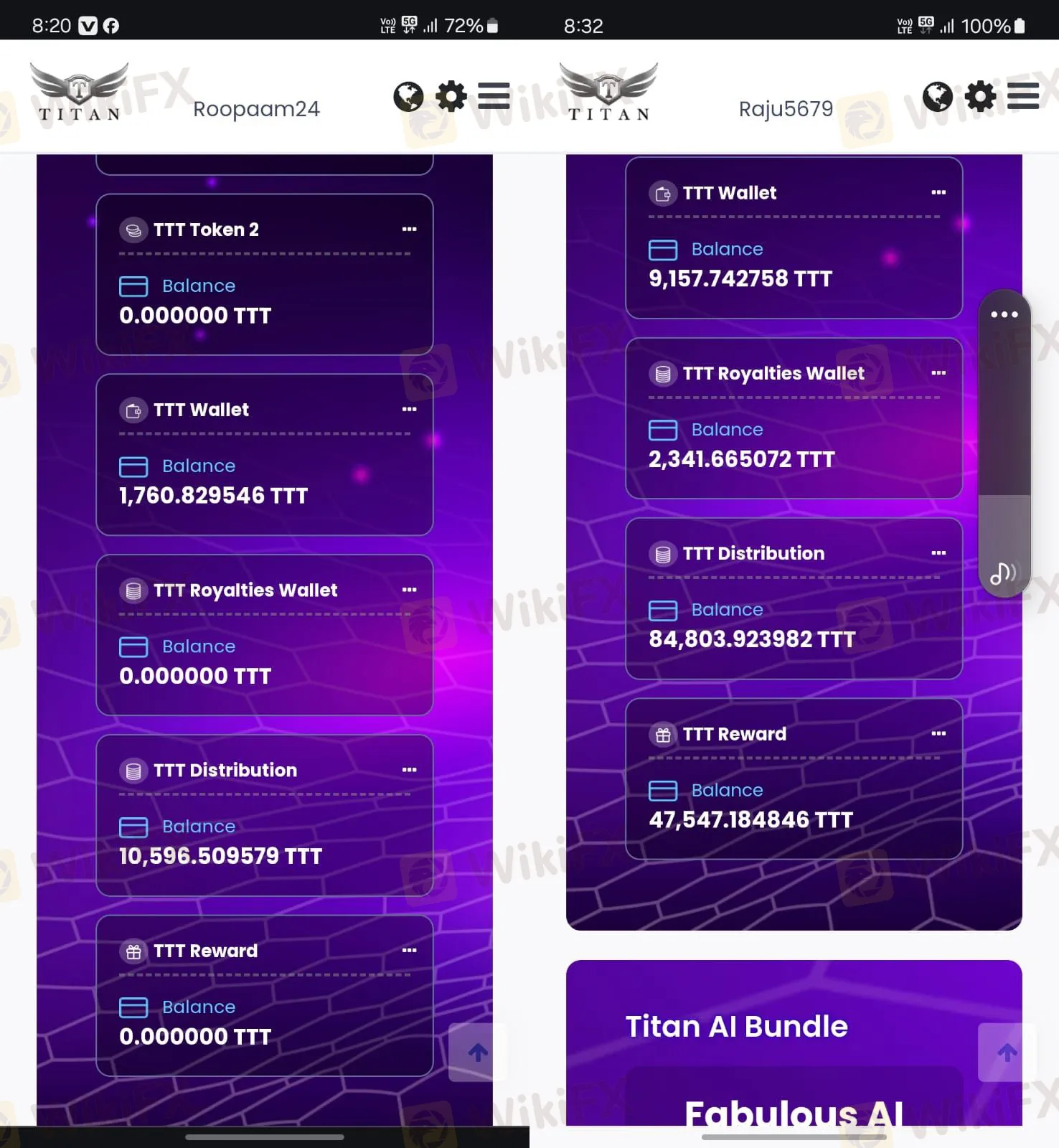
- Forced Tokenization: Multiple users cited that the company forcibly converted their funds into a cryptocurrency token named “TTT” (Titan Token) or moved funds to a “distribution wallet” without permission. Users report that these tokens cannot be withdrawn or have lost their value.
- “Tax” Demands: Some investors reported that when they attempted to withdraw, the broker demanded an additional “tax” payment (e.g., $566 USD in one case). Even after paying these fees, the withdrawals were not released, a tactic common in recovery scams.
Claims of Company Closure
Recent user reports from late 2024 and 2025 allege that the company has effectively “closed” or shut down its website services in certain regions. Users mentioned that communication channels were cut off, and accounts were blocked without notice. One user stated, “The company closed now... they forcibly kept the investor's dollars.”
Trading Conditions and Transparency
The review data for Titan Capital Markets effectively lacks standard trading information.
- Platform: There is no verified information regarding standard trading software like MT4 or MT5.
- Trading Costs: Data on spreads, commissions, and leverage is unavailable.
- Service Model: According to user complaints and regulatory disclosures, the company marketed “Investment Packages,” “Copy Trading,” and “AI Trading” with promises of monthly returns (ROI). This structure aligns more with high-yield investment programs (HYIP) than standard forex brokerage services.
Pros and Cons of Titan Capital Markets
Based on the available data, the disadvantages heavily outweigh any potential benefits.
Pros:
- Online customer support (Email available).
Cons:
- Regulatory Warning: Blacklisted by the Philippines SEC for Ponzi-like activities.
- License Issues: Operating beyond the scope of its Australian ASIC license.
- Withdrawal Blockage: Massive volume of complaints regarding stuck funds.
- Scam Tactics: Reports of forced token conversion and demands for “tax” payments.
- Low Score: Rated only 1.45/10.
Can You Trust Titan Capital Markets?
No, Titan Capital Markets is not safe. The combination of an “Exceeded” regulatory status in Australia and a “Blacklist” warning from the Philippines SEC provides a strong indication of illegitimacy.
The overwhelming volume of complaints regarding denied withdrawals, forced crypto-token conversions, and silent account suspensions confirms that investor funds are at extreme risk. Investors are strongly advised to avoid depositing money with this entity.
Protect Your Capital with WikiFX
Before investing with any broker, check their score and regulatory status on the WikiFX App. Use the app to access the latest “Exposure” lists to see if other traders are reporting scams, ensuring you avoid high-risk platforms like Titan Capital Markets.