Acetop UK Reports 2025 Loss as Trading Volumes Drop to $9.5 Billion
Acetop Financial Limited posted a £35,691 pretax loss in 2025 after revenue declined and trading volumes fell 21% to about $9.5 billion.
Original

简体中文
繁體中文
English
Pусский
日本語
ภาษาไทย
Tiếng Việt
Bahasa Indonesia
Español
हिन्दी
Filippiiniläinen
Français
Deutsch
Português
Türkçe
한국어
العربية

Abstract:If banks can go bankrupt, what about online brokers, particularly those that are not officially regulated by the government and may not even have a physical office?
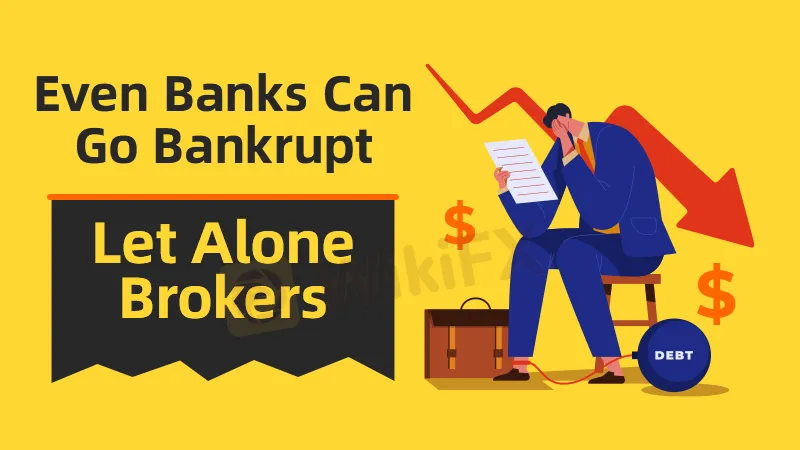
In the financial world, stability is often taken for granted. Many assume that large institutions, especially banks, are invincible. However, history has shown us that even banks can face bankruptcy, leaving a trail of financial ruin. This stark reality raises an even more pressing question: If banks can go bankrupt, what about online brokers, particularly those that are not officially regulated by the government and may not even have a physical office?
Banks, with their vast resources and regulatory oversight, have collapsed in the past, leaving customers in disarray. The 2008 financial crisis is a prime example, where several big-name banks either failed or required government bailouts. This crisis highlighted that no institution is too big to fail.
Online brokers, on the other hand, often operate with less oversight and fewer resources. Many are not officially regulated by any governmental body, making them significantly riskier for traders. The absence of a physical office can also be a red flag, indicating that the broker might disappear without a trace if things go south.
For traders, the allure of quick profits can sometimes overshadow the necessity of due diligence. However, neglecting to thoroughly evaluate an online broker can result in severe consequences. It's crucial to watch for key red flags that may indicate potential issues.

One major red flag is the lack of regulation. It is essential to ensure that the broker is regulated by a reputable financial authority. Regulation provides a layer of security and accountability, and brokers operating without it pose a significant risk to traders. Without regulatory oversight, there is no assurance that the broker adheres to industry standards or ethical practices.
Another important factor is the presence of a physical address. A credible broker should have a verifiable physical office. Brokers operating solely online, without a physical location, can easily disappear, making it difficult for traders to seek recourse in case of issues. The lack of a physical address can also be a sign of a fly-by-night operation, which is a significant red flag.
Unrealistic promises are another indicator of potential problems. Brokers that offer guaranteed returns or exceptionally high profits with minimal risk should be approached with caution. In the world of trading, there are no guarantees, and high returns usually come with high risk. Promises of easy and risk-free profits are often too good to be true and should raise immediate concern.
Customer reviews provide valuable insights into a broker's reputation and reliability. Negative reviews and complaints from other users can reveal underlying issues that may not be immediately apparent. It is important to research what other traders are saying about the broker. Consistent complaints about withdrawal issues, poor customer service, or unethical practices are significant red flags.
Transparency is crucial in choosing a broker. Brokers should be clear about their fees, policies, and terms of service. If this information is difficult to find or unclear, it is a warning sign. Lack of transparency can lead to unexpected costs and unfavourable trading conditions. A trustworthy broker will provide all necessary information upfront, ensuring that traders are fully informed before making any commitments.

WikiFX is a leading global forex broker regulatory query platform designed to empower traders with critical information about forex brokers. By providing comprehensive data on regulatory status, customer reviews, broker backgrounds, and potential risks, WikiFX serves as an invaluable tool for ensuring safe and informed trading decisions. With the WikiFX mobile application, traders can effortlessly verify the legitimacy of brokers, identify red flags, and access detailed profiles, all aimed at safeguarding their investments in the dynamic and often unpredictable forex market.
The collapse of even the most established banks serves as a reminder that financial stability is never guaranteed. For traders, this underscores the importance of conducting thorough due diligence when choosing an online broker. By avoiding brokers with red flags and utilizing resources like the WikiFX app, traders can protect their investments and trade with greater peace of mind.
In the volatile world of trading, being informed and cautious is your best defence against financial loss. Remember, if banks can go bankrupt, so can online brokers—especially those operating under the radar. Stay vigilant, and always prioritize safety over the allure of quick gains.

Disclaimer:
The views in this article only represent the author's personal views, and do not constitute investment advice on this platform. This platform does not guarantee the accuracy, completeness and timeliness of the information in the article, and will not be liable for any loss caused by the use of or reliance on the information in the article.
Acetop Financial Limited posted a £35,691 pretax loss in 2025 after revenue declined and trading volumes fell 21% to about $9.5 billion.
ORCA MARKETS, a Saint Lucia-based forex broker, is reportedly facing many complaints from users as of mid 2026. They frequently complain about the app that refuses to work properly for hours, preventing them from taking the right position to unleash market movement. Complaints have been made about fund losses and deposit failures on the platform. These allegations made it imperative to investigate the broker on different aspects, including the regulatory oversight. We have done so in this ORCA MARKETS review article.
Did your attempt to withdraw funds from the LOYAL PRIMUS platform lead to your account deactivation by the broker? Did the broker prevent you from withdrawing when you made profits? Did the broker cancel your withdrawal application by accusing you of suspicious trading activity? These allegations have grown in numbers on independent broker review tools such as WikiFX. In this LOYAL PRIMUS review article, we have examined all these allegations thoroughly.
Failed to withdraw funds from the Eurotrader platform despite repeated requests? Do you fail to trade due to persistent login issues? Has the customer support service failed to resolve the issue? Did you also face wide spreads that led to a massive profit reduction? All these user allegations have become strong headlines on broker review platforms such as WikiFX. Through this Eurotrader review article, we have shared the user allegations along with a regulatory overview.
 WikiFXWikiFXWikiFXWikiFXWikiFXWikiFXWikiFXWikiFXWikiFXWikiFX
