Abstract:The European Securities and Markets Authority (ESMA) has issued guidelines on copy trading, aimed at enhancing investor protection, increasing transparency, and addressing potential conflicts of interest. The guidelines require brokers and copy-trading platforms to provide detailed information on risks and trader qualifications, regulate remuneration schemes, and address conflicts of interest. Compliance may require significant investment, and failure to comply may result in reputational damage, fines, or license revocation. The guidelines could lead to industry consolidation, reduced investor choice, and inhibited innovation.
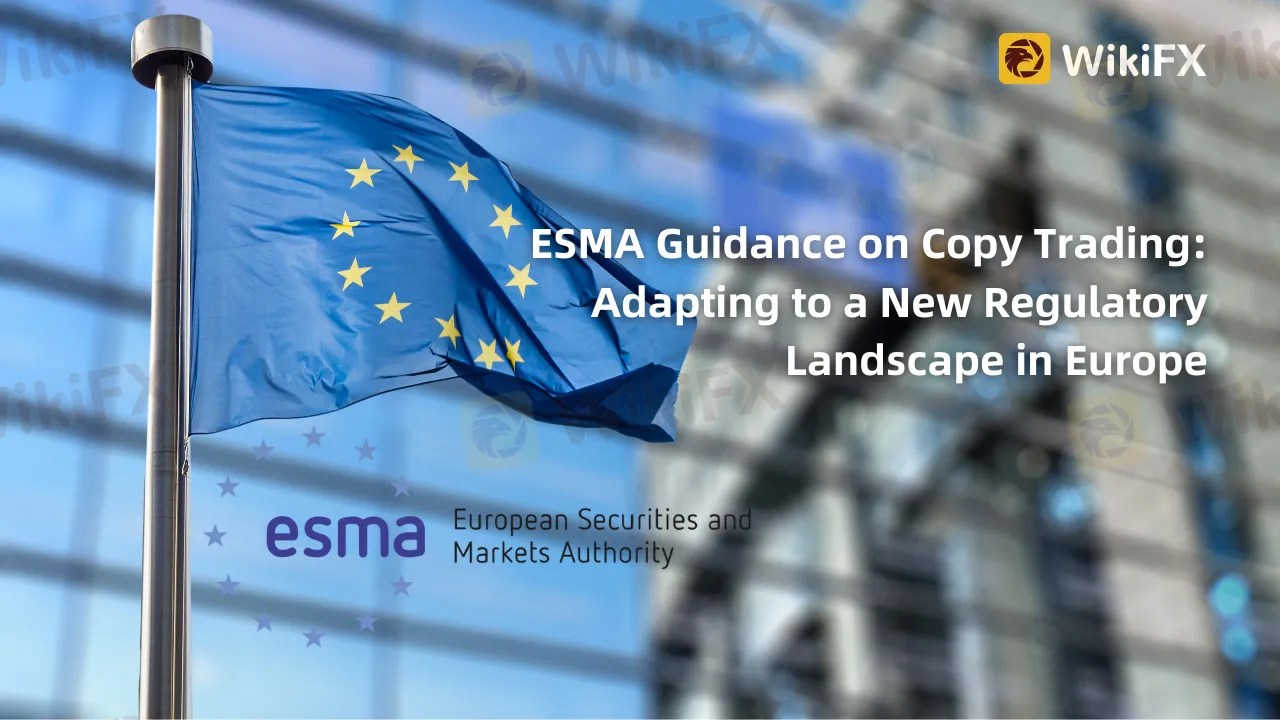
The European Securities and Markets Authority (ESMA) has announced recommendations on copy trading, a popular investing method in which investors imitate the real-time transactions of expert traders. This decision has placed European brokers at a crossroads since the new legal climate necessitates modifications to their methods and business models. In this article, we look at the particular ESMA rules, their influence on investor safety and transparency, the issues that brokers confront, and the possible ramifications for the sector as a whole.
ESMA Guidelines on Copy Trading
ESMA has issued a set of guidelines for copy trading, focusing on enhancing investor protection, increasing transparency, and addressing potential conflicts of interest. Some of the specific guidelines include:
Ensuring brokers and copy trading platforms provide sufficient information on the risks involved.
Requiring that the traders being copied are experienced and qualified.
Mandating detailed disclosure of trader information, trading strategies, and past performance.
Regulating remuneration schemes for traders and brokers.
Requiring proper management of any potential conflicts of interest.
Impact on Investor Protection
The guidelines aim to enhance investor protection by requiring brokers and copy-trading platforms to provide clients with detailed information on the risks involved in copy-trading. By ensuring that only experienced and qualified traders can be copied, the guidelines reduce the likelihood of inexperienced investors following unsuitable trading strategies. Moreover, the regulation of remuneration schemes helps prevent the misalignment of interests between traders, brokers, and investors.
Increasing Transparency in the Copy Trading Industry
Transparency is a crucial aspect of investor protection, and the ESMA guidelines work towards increasing transparency in the copy trading industry. Investors may make better-educated selections about which traders to follow by demanding the publication of specific information about traders, their strategy, and prior success. This increased openness also helps level the playing field for investors and provides a more trustworthy environment.
Addressing Potential Conflicts of Interest
ESMA's guidelines aim to address potential conflicts of interest by regulating the way traders and brokers are compensated. By implementing proper management of any potential conflicts, the guidelines ensure that the interests of traders, brokers, and investors are better aligned, reducing the risk of unethical practices.
Challenges for European Brokers
European brokers face several challenges in complying with ESMA's guidance on copy trading. These challenges include:
Compliance costs: Adhering to the new guidelines may require significant investment in technology, personnel, and processes.
Reputational risks: Failure to comply can result in reputational damage, fines, or even license revocation.
Shift in business models: Some brokers may need to move away from offering copy trading services or make changes to their business models to align with the new regulatory framework.
Adapting Business Models
To adapt to the new regulatory environment, European brokers may consider the following strategies:
Investing in compliance infrastructure: By developing robust compliance systems, brokers can reduce the risk of non-compliance and protect their reputations.
Enhancing transparency and communication with clients: Providing clear information about risks, trader qualifications, and performance can help foster trust with investors.
Reevaluating remuneration schemes: Aligning compensation structures with the interests of all stakeholders can help mitigate potential conflicts of interest.
Potential Consequences for Non-Compliant Brokers
Brokers who fail to comply with ESMA's guidance may face a range of consequences, including reputational damage, fines, or license revocation. Additionally, non-compliant brokers may lose clients, as investors increasingly seek transparent and trustworthy copy trading platforms.
Consolidation in the Copy Trading Industry
Increased regulatory scrutiny may lead to consolidation in the copy-trading industry, with only larger players or those with more robust compliance systems able to continue offering copy-trading services. Smaller brokers may find it challenging to keep up with the costs and complexities of compliance, leading them to exit the market or merge with larger firms. This consolidation could result in a more stable and reliable industry but may also limit investor choice and stifle innovation.

Impact on the Competitiveness of the European Financial Market
ESMA's guidance on copy trading could impact the overall competitiveness of the European financial market. While increased transparency and investor protection measures are likely to boost the market's reputation, the new regulations may also create entry barriers for new or smaller firms. Furthermore, industry consolidation may result in less competition, which may lead to higher fees and less innovation in the long run.
Potential Drawbacks of Unintended Consequences
While ESMA's guidance on copy trading is designed to protect investors and increase transparency, there are potential drawbacks or unintended consequences that may arise. For instance:
Reduced investor choice: With increased regulation and potential consolidation in the industry, investors may have fewer options when it comes to selecting a copy trading platform or broker.
Inhibited innovation: The increased compliance costs and barriers to entry could stifle innovation, as smaller firms may struggle to develop and launch new products or services.
Overreliance on compliance: Investors may become overly reliant on regulatory compliance as a proxy for safety and may not conduct thorough due diligence on their own, leading to potential risks.
Conclusion
ESMA's guidance on copy trading presents European brokers with both challenges and opportunities. While the guidelines are intended to improve investor protection, increase transparency, and address potential conflicts of interest, they also require significant changes in broker practices and business models. To stay competitive, brokers must adapt to the changing regulatory framework, while investors must be aware of possible downsides and unforeseen effects. Finally, the effectiveness of these recommendations in attaining their objectives will be determined by their successful implementation and the industry's capacity to adjust to the new situation.
Download and install the WikiFX App on your smartphone to stay updated on the latest educational article.
Download the App here: https://social1.onelink.me/QgET/px2b7i8n