WikiFX Valentine's Message | Trade Safely, Together Every Step of the Way
In the Forex Market, Trust Is Not a Promise — It’s Verified Through Safety, Transparency, and Support
Original

简体中文
繁體中文
English
Pусский
日本語
ภาษาไทย
Tiếng Việt
Bahasa Indonesia
Español
हिन्दी
Filippiiniläinen
Français
Deutsch
Português
Türkçe
한국어
العربية

Abstract:However, it can be difficult to fully comprehend the benefits and drawbacks of investing in and trading CFDs, especially for traders who are just starting out. In this article, we will look at the CFD trading principle, as well as the similarities and differences between Forex and CFD.
Click Here: After you read it, Daily Routine with WikiFx visit IC website
CFD and forex trading are popular among traders due to their large leverage. Currency exchange is the world's oldest form of trading, dating back thousands of years, while CFDs are a relatively new market, dating back only about 20 years.
Investing in and trading CFDs has its benefits and drawbacks, especially for new traders. In this post, we will compare and contrast CFD trading with Forex trading.
So, CFD?
A CFD is a contract between a buyer and a seller that says that the buyer must pay the seller the difference between the current value of an asset and its value at contract time.
This type of investing gives for a lot of freedom. Traditionally, you acquire an asset hoping for it to go higher. With CFD trading, your options are significantly broader. When you buy the contract, you can speculate on price changes.
Every point the instrument's price moves in your favor is multiplied by the amount of CFD units you bought or sold. You lose money every time the price moves against you.
CFDs and Forex: Comparative Analysis
While there are some similarities and overlaps between these two markets, they are vastly distinct. Whereas Forex focuses on trading currency pairings, CFDs offer a variety of trading choices.
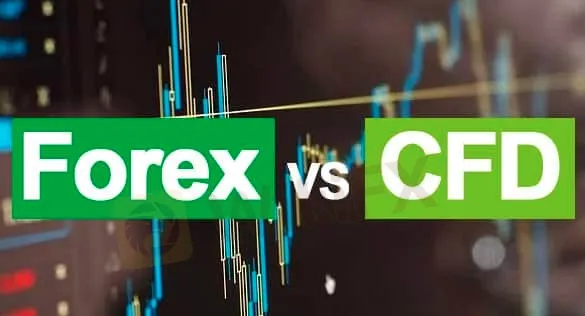
CFDs and Forex Identicals
Leverage
Forex and CFD trading are both leveraged. This allows traders to open positions larger than their capital can normally support.
This is because brokers provide extra capital in the form of leverage for every trade made on a forex or CFD platform.
2. Avoid physical asset transfers
CFD and forex trading avoid physical asset transfers. You can buy them both over the counter (OTC) and trade them through a network of financial institutions. Their trades are usually executed similarly.
3. Long or short?
You can trade long or short in both markets. Trading forex and CFDs has this specific edge. Any direction is possible for traders to speculate. These markets are exceedingly volatile. If you think the financial asset will do well, you can acquire it. If not, you expect the asset to depreciate, allowing you to sell short.
4. Fee
The only cost of trading CFDs and Forex is the spread, unlike other trading instruments that impose commissions and other finance fees.
CFD vs Forex differences
1. Base assets
The fundamental distinction between Forex and CFD trading is that Forex is purely currency-based, whereas CFDs include a wide range of markets, including indices, metals, and energy. FX trading involves trading one currency against another in pairs and in consistent lot sizes.
2. Time swaps
CFD trading does not follow the famed “24/7” FX trading methodology (which only means that trades can be made 24 hours a day throughout the work week). Instead, CFDs are constrained by the market's trading hours.
4. Economic Factors
Diverse factors affect both markets. The currency market is heavily influenced by global macroeconomic events and forces. There are several elements that can affect the global economy such as substantial swings in employment, risk attitude, monetary policy expectations and their impact on GDP, international political upheavals and even environmental problems.
The CFD market's price swings, on the other hand, are influenced by the instrument's individual variables. For example, supply and demand for a given commodity can alter over time.
Cons of CFD Trading
Prons:
1. More markets reachable
The most essential one is that the CFD market opens up a new world of options beyond the Forex market. And all on the same trading account.
Gain from market declines
Instead of buying contracts, you sell them to open a short CFD position. Then you buy the equal number of CFDs to settle your trade.
This allows you to profit when markets decline, adding another dimension to your trade.
3. Leverage trading
CFDs allow leveraged trading. This enables you to control a larger stake with less capital. Some stocks barely move, so you won't make much money unless you invest a lot of money. Leverage allows you to profit from modest market moves. Obviously, this adds danger, which I discuss in the disadvantages.
Cons:
1. You may lose all your money.
Inflation is unusual. Stocks also tend to bounce back following losses. In CFD trading, if your position falls below a specific level, it closes. No hope of recovery.
Margin Requirements
Unlike other forms of leveraged trading like forex, the broker sets the margin requirements for each market. This can hinder your larger trading plan and add an extra layer of planning to the pre-trade process to examine the feasibility of a prospective return.
3. Overtrading is easy.
The rapidity of CFD trading makes it simple to overtrade. Overtrading is a common rookie mistake. And I see that all the time on CFD platforms. Traders who lack emotional control can easily keep opening positions or worse, closing positions for small profits. Big blunders.
Conclusion
Forex and CFDs are both popular trading choices that can be profitable when handled properly. Both interesting trading opportunities have benefits and drawbacks. Knowing the differences between CFDs and FX might help investors make smarter trading decisions. It is possible to use both, but for beginners, it is best to stick to one or the other.
Disclaimer:
The views in this article only represent the author's personal views, and do not constitute investment advice on this platform. This platform does not guarantee the accuracy, completeness and timeliness of the information in the article, and will not be liable for any loss caused by the use of or reliance on the information in the article.

In the Forex Market, Trust Is Not a Promise — It’s Verified Through Safety, Transparency, and Support
Did you face losses due to a sudden change in the trading price on the datian platform? Were your transaction records deleted by the Hong Kong-based forex broker? Did the broker liquidate your trading account multiple times despite not reaching the stage where it mandated this move? Have you experienced heavy slippage on the trading platform? Concerned by these issues, traders have complained about the broker online. We will let you know of these with attached screenshots in this datian review article. Keep reading!
Did you face constant rejections of your fund withdrawal applications by TopstepFX? Have you been denied withdrawals in the name of hedging? Did you witness an account block without any clear explanation from the forex broker? There have been numerous user claims against TopstepFX regarding its withdrawals, payout delays and other issues. In the TopstepFX review article, we have investigated the top complaints against the US-based forex broker. Keep reading!
When choosing a broker, the first question is always about safety and legitimacy. Is my capital safe? For Mazi Finance, the answer is clear and worrying: Mazi Finance is an unregulated broker. While the company, MaziMatic Financial Services LTD, is registered in the offshore location of Saint Lucia, this business registration does not replace strong financial regulation from a top-level authority. Independent analysis from regulatory watchdogs shows a very low trust score, made worse by official warnings from government financial bodies and many user complaints about serious problems. This article provides a clear, fact-based analysis of the Mazi Finance regulation status. Our goal is to break down the facts and present the risks clearly, helping you make an informed decision and protect your capital.
 WikiFXWikiFXWikiFXWikiFXWikiFXWikiFXWikiFXWikiFXWikiFXWikiFX
