Abstract:USDX has experienced a sharper volatility since this year. And it continues dropping despite of the temporary rally in US stock market stimulated by the hawkish fiscal and monetary policy.
WikiFX News (6 Oct.) - USDX has experienced a sharper volatility since this year. And it continues dropping despite of the temporary rally in US stock market stimulated by the hawkish fiscal and monetary policy.
In its Statement on Longer-Run Goals and Monetary Strategy, the Federal Open Market Committee (FOMC) will put more focus on the employment, reduce the inflation intolerance, and lower the long-term interest rate expectations.
In a CME FedWatch tools analysis, the Fed will keep 100% probability of maintaining an interest rate ranging 0-0.25% before March 2021; According to the Dot-Plot chart released in the FOMC meeting in June, the Fed official expected not to increase interest rate at least until the end of 2022. All these explain that it will take a long time for the US to recover its economy. At the same time, without the support by economic fundamentals, USDX is hard to rise.
Furthermore, the eurozone will attract more capital because of the increase in euro, which may challenge USD‘s position of the world’s reserve currency. The euro accounts for 57.6% of the USDX. Therefore, a rising euro is possibly to lead to a depreciated USD, which is expected to enter into a new round of depreciation.
All the above is provided by WikiFX, a platform world-renowned for foreign exchange information. For details, please download the WikiFX App: bit.ly/WIKIFX
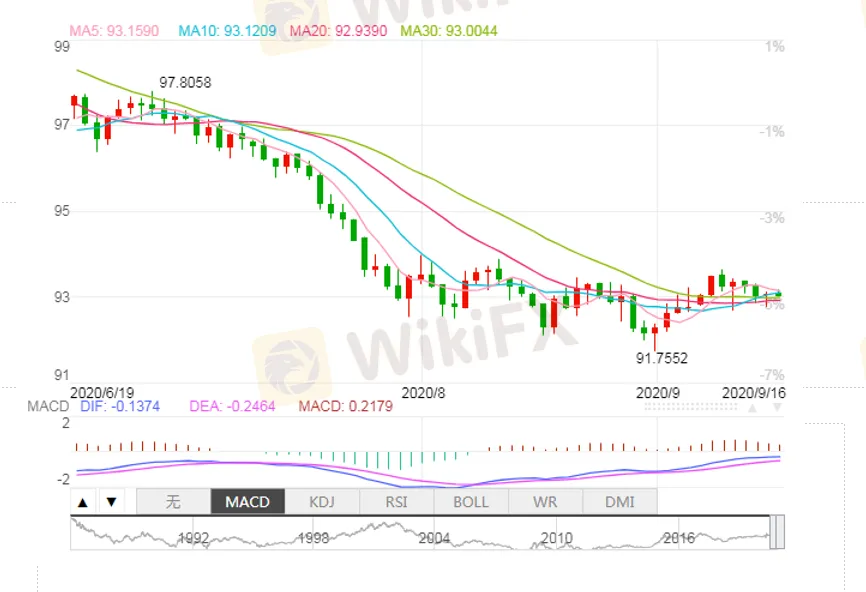
Chart: USDX Trend
Disclaimer:
The views in this article only represent the author's personal views, and do not constitute investment advice on this platform. This platform does not guarantee the accuracy, completeness and timeliness of the information in the article, and will not be liable for any loss caused by the use of or reliance on the information in the article.