Breaking: USD/JPY Breaks Through 1 Year Highs
USD/JPY just broke through 1-year highs earlier than expected.
Original

简体中文
繁體中文
English
Pусский
日本語
ภาษาไทย
Tiếng Việt
Bahasa Indonesia
Español
हिन्दी
Filippiiniläinen
Français
Deutsch
Português
Türkçe
한국어
العربية

Abstract:On Wednesday, U.S. stocks grew at the expense of the haven-associated USD, curbing its gains and punishing AUZ, NZD & GBP at the same time.
WikiFX News (13 Aug)- On Wednesday, U.S. stocks grew at the expense of the haven-associated USD, curbing its gains and punishing AUZ, NZD & GBP at the same time.
Among the currencies, NZD was still reeling from the RBNZ (Reserve Bank of New Zealand) rate decision for August while GBP also suffered and became the biggest loser in the aftermath of U.K. latest GDP data which showed a jaw-dropping figure
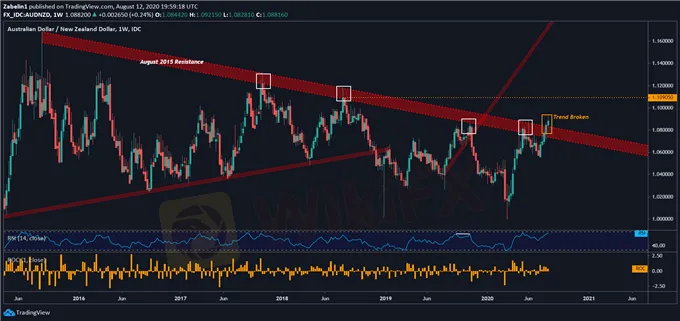
On Thursday, Asia-Pacific stock markets may rise as part of a sentimental echo effect after Wall Street trade. Accordingly, USD and JPY are possible to further retreat but turn around NZD's setback and put premium on AUD. Furthermore, AUD will be partly affected by the countrys jobs data for July.
All the above is provided by WikiFX, a platform world-renowned for foreign exchange information. For details, please download the WikiFX App: (download link)
You can also find us here-
Vietnam: www.facebook.com/wikifx.vn
Thailand: www.facebook.com/wikifx.th
Indonesia: www.facebook.com/wikifx.id
South Asia: www.facebook.com/wikifxglobal
Italy: www.facebook.com/wikifx.it
Japan: www.facebook.com/wikifx.jp
India: www.facebook.com/wikifx.in
Pakistan: www.facebook.com/wikifx.pk
Bangladesh: www.facebook.com/wikifx.bd
Arabian countries: www.facebook.com/wikifx.arab
Russian countries: www.facebook.com/wikifx.russian
French countries: www.facebook.com/wikifx.French
Western Pacific area: www.facebook.com/wikifx.westernpacific
Disclaimer:
The views in this article only represent the author's personal views, and do not constitute investment advice on this platform. This platform does not guarantee the accuracy, completeness and timeliness of the information in the article, and will not be liable for any loss caused by the use of or reliance on the information in the article.

USD/JPY just broke through 1-year highs earlier than expected.
A Good Week For the US Dollar As It Gains Strongly Against Other Major Pairs.

Performance like this hasn't been seen since 2021

The EUR/USD pair ended the week in the red last week as many investors remained in a holiday mood. It was trading at 1.1720, down slightly from last year’s high of 1.1910 ahead of key events this week.
 WikiFXWikiFXWikiFXWikiFXWikiFXWikiFXWikiFXWikiFXWikiFXWikiFX
